I just finished a heavy evening strength session — legs were on fire, my back is pleasantly sore, and I still need to eat something that helps my muscles recover without turning my sleep into a train wreck. If you’re like me, the trade-off between getting enough protein and carbs to build muscle and avoiding a late-night caffeine‑ or sugar-driven insomnia is real. Below I share the practical approach I use and recommend: what to eat, when, and why it helps muscle growth while protecting sleep quality.
Why post-evening nutrition matters (but it’s not magical)
First, a quick reality check: muscle growth is driven primarily by total daily protein intake, progressive overload in training, and overall calorie balance. That said, the meal after an evening session still matters — it contributes to net protein balance overnight, replenishes some glycogen if needed, and can help you fall and stay asleep if chosen wisely. The goal is to give your body the amino acids it needs for overnight repair while avoiding stimulants, excessive sugar, or heavy meals that disrupt sleep.
Core rules I follow after evening strength sessions
- Prioritise 20–40 g of high-quality protein within 30–120 minutes of finishing training. That range hits the anabolic dose for most people and ensures a steady supply of amino acids overnight.
- Include 0.5–1 serving of slowly digested protein if you train late (e.g., cottage cheese, Greek yoghurt, or casein). Slow protein helps keep amino acids available longer during sleep.
- Keep carbs moderate — enough to refill some glycogen and aid recovery, but avoid large sugary meals that spike energy and impair sleep.
- Skip caffeine and limit alcohol — both can hurt sleep quality and recovery even if they don't stop you from falling asleep.
- Watch portion size and meal composition to avoid reflux or the discomfort that makes you wake at night.
What to eat: practical options that work for most people
Below are my favourite, practical combos depending on how hungry I am and how late it is.
- Minimal hunger / late nights (light and effective): 150–200 g full-fat Greek yoghurt + 20–30 g whey or 1 scoop of casein mixed in + small handful of berries. This gives ~25–35 g protein, some carbs, and slow-digesting protein if you use casein.
- Moderate hunger (balanced): 2 slices wholegrain toast, 3–4 oz (85–115 g) turkey or chicken breast, a small banana. Easy on the stomach and provides ~25–35 g protein plus carbs for glycogen.
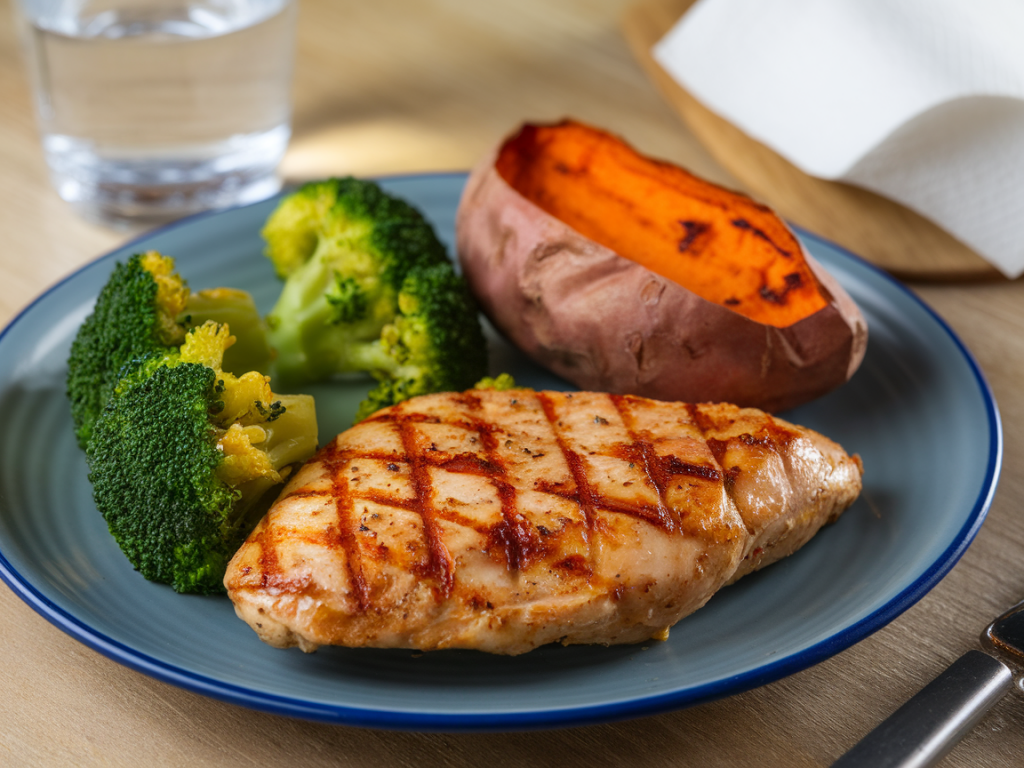
- Full meal required: Grilled salmon (120–150 g) + small baked sweet potato + steamed greens. Salmon gives protein plus healthy fats (omega-3s) which can support recovery; keep the sweet potato portion moderate to avoid a sugar spike.
- Prefer plant-based: Tofu scramble (200 g tofu) with quinoa (about 1/2 cup cooked) and avocado. Combine different plant proteins to ensure a full amino acid profile; add a sprinkle of nutritional yeast for B12 and extra flavour.
- Quick shake for late sessions: 1 scoop whey + 1 scoop micellar casein or a slow-release protein blend mixed with milk or milk alternative + 1 tbsp peanut butter + a small banana. Fast to prepare, hits the leucine threshold, and casein slows digestion overnight.
Protein specifics: how much and what type
Research and practical experience both point to a target in the 20–40 g protein window per meal for stimulating muscle protein synthesis for most people. The exact amount depends on body size and training experience — bigger people may need more. Importantly, include a source of complete protein (contains all essential amino acids) or combine complementary plants.
Leucine is the trigger amino acid for muscle protein synthesis. Aim for ~2.5–3 g leucine in the meal. That’s typically achieved with 20–30 g of high-quality protein (whey, dairy, meat, eggs). If you rely on plant proteins, increase the dose slightly or combine sources.
Slow-digesting protein for overnight recovery
If you finish training late and sleep soon after, adding a source of slow-digesting protein is smart. Casein (found naturally in cottage cheese and available in powders) releases amino acids slowly and can reduce overnight muscle protein breakdown. That doesn’t mean you must force cheese if you don’t like it — a casein-containing shake or a bowl of cottage cheese with fruit is an easy option.
Carbs: how much and which ones
Carbs aren’t the enemy — they help replenish muscle glycogen and can even improve sleep when paired appropriately. For evening workouts, aim for a moderate portion (20–50 g carbs) depending on session intensity and your hunger. Choose lower-glycaemic sources like sweet potato, oats, or wholegrain bread to avoid a big blood sugar surge that can disturb sleep.
Fats and digestive load
A moderate amount of healthy fats is fine (olive oil, avocado, fatty fish). What to avoid: very fatty, fried or very large meals right before bed. Heavy fats slow gastric emptying and can cause discomfort or reflux that disturbs sleep. If you’re sensitive, keep fats modest in the post-workout meal and include healthy fats earlier in the day.
Specific foods and small tweaks that help sleep
- Tart cherry juice (small glass, ~30–50 ml): contains melatonin precursors and some evidence shows it can improve sleep duration; use occasionally if sleep is poor.
- Magnesium glycinate (supplement): can help with sleep latency and muscle relaxation for some people; 200–400 mg before bed is a common dose but check with a professional if you’re on medication.
- Warm milk or dairy: culturally classic for a reason — milk contains tryptophan and calcium, which can modestly support sleep. Combine with casein for repair if you like dairy.
Timing and practical tips
- Eat within 30–120 minutes after training. If you’ll sleep within an hour, favour a lighter, more rapidly digested meal with a slow-protein element (casein or cottage cheese).
- Limit liquids right before bed if you tend to wake to pee. Hydrate adequately during and immediately after training, then taper.
- Avoid caffeine after ~6–8 hours before bedtime — individual sensitivity varies, but as a rule I stop caffeine at least 6 hours before sleep.
- Keep portion sizes sensible — enough to promote recovery but not so large you’re uncomfortable falling asleep.
Quick recipe ideas I use
- Greek yoghurt + 1 scoop casein + 1 tbsp honey + small handful mixed berries.
- Cottage cheese bowl with pineapple, cinnamon and a sprinkle of chopped almonds.
- Turkey & avocado on wholegrain toast with a side of steamed spinach.
- Salmon bowl: 120 g salmon, 1/2 cup cooked quinoa, roasted broccoli, drizzle of olive oil.
Comparison table: fast, balanced, and slow-release post-workout options
| Scenario | Example | Protein (g) | Sleep friendliness |
|---|---|---|---|
| Fast/light | Whey shake + banana | 20–30 | High (if low-fat) |
| Balanced | Turkey sandwich + yoghurt | 25–35 | High |
| Slow-release (late night) | Cottage cheese + berries or casein shake | 25–40 | Very high |
Pick one of these patterns and adapt it to your tastes and schedule. The combination of an adequate protein dose, some carbs, and a slow-digesting protein source when needed will help you build muscle while protecting sleep — which is itself one of the most powerful recovery tools you have.