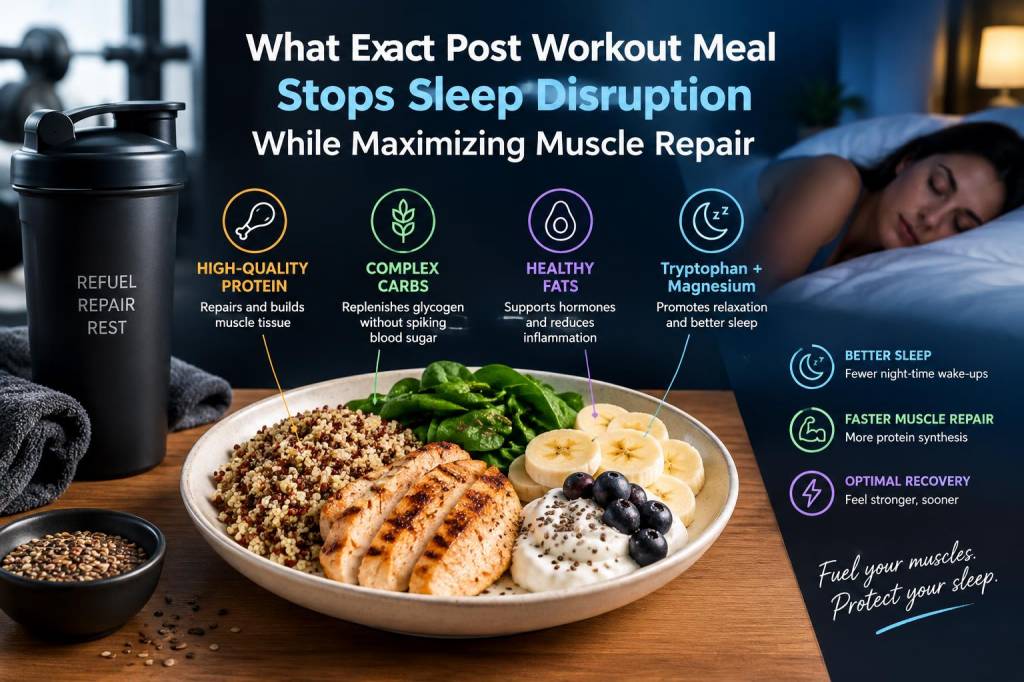
Why post-workout food can help or hurt your sleep
After a tough evening session, I used to reach for whatever was fastest: a protein shake, leftover pizza, sometimes a whole bag of crisps. The result? Tossing and turning, waking up groggy, or next-day soreness that lingered. Over time I learned that the timing and makeup of the post-workout meal do more than refill glycogen and start muscle repair — they can directly influence how well you fall asleep and how restorative that sleep is.
Two physiological processes matter here. First, muscle repair needs amino acids and a bit of energy; insulin and certain nutrients help shuttle those building blocks into muscle. Second, the nervous system and hormones that control sleep — especially melatonin and cortisol — are sensitive to meal timing, carbohydrate type, and stimulants like caffeine. The trick is choosing a meal that supplies the right substrates for recovery without spiking cortisol, disrupting melatonin, or causing digestive issues that keep you awake.
What people often ask
I’ll answer those with practical, evidence-aligned advice that I use and recommend to clients.
Core principles I follow for night-time post-workout meals
My preferred post-workout plate for muscle repair and good sleep
When I train in the evening and want solid sleep, I aim for a meal built around three pillars: 25–35 g protein, 20–40 g low–moderate GI carbohydrates, and small amounts of healthy fat + sleep-supportive micronutrients. Example combinations I rotate through:
These meals balance quick amino acids for muscle with carbs that don’t cause big glucose swings. The small stimulant-free dark chocolate or banana adds a comforting flavor without caffeine (ensure chocolate is low in caffeine if you’re sensitive).
Drink or shake — when a liquid meal makes sense
Sometimes you train late and need something quickly digested. A whey or fast-digesting plant protein shake with a small amount of oats or a banana can be ideal. I often use a shake when I’m less than 45–60 minutes from bed. Quick recipes I use:
These provide effective doses of leucine-rich protein, a touch of carbs, and minimal fat for faster gastric emptying. If you’re lactose-intolerant, choose lactose-free milk or pea/rice blends that you tolerate well.
Foods and habits to avoid after evening training
Timing, portion sizes and tailoring to goals
Muscle repair doesn’t require an enormous late-night feast. For most people, 20–40 g protein and 200–400 kcal is sufficient after a typical resistance session. If you’ve done a very long endurance session and depleted glycogen, you may need more carbs. In that case, aim for whole-food carbs earlier in the evening or use a moderate carb portion in your post-exercise meal and ensure you get adequate carbs the next morning.
If weight loss is the goal, focus on the lower end of the calorie range and prioritize protein so you preserve lean mass while avoiding late-night overeating. If you’re in a muscle-building phase, slightly higher calories and an extra snack earlier in the evening can help, but I still avoid very large meals right before bed.
Sample evening post-workout options (quick table)
| Option | Protein | Carbs | Why I like it |
| Whey shake + banana | 25–30 g | 25–30 g | Fast digestion, ideal if bedtime soon after workout |
| Grilled salmon + sweet potato | 25–30 g | 20–35 g | Omega-3s and slow carbs, good for recovery and satiety |
| Greek yoghurt + oats + berries | 20–30 g | 20–30 g | Probiotics, calcium, and sustained carb release |
| Tofu + wholegrain rice + greens | 20–25 g | 25–40 g | Plant-based, magnesium-rich greens, lower fat |
Practical tips I use and recommend
Post-workout nutrition isn’t one-size-fits-all, but the balance I’ve described — adequate protein, modest low-GI carbs, minimal late fat and stimulants, and sensible timing — consistently helps me and the people I coach get both better recovery and better sleep. Try a few of the sample meals and adjust based on how you sleep and how your muscles feel the next day.