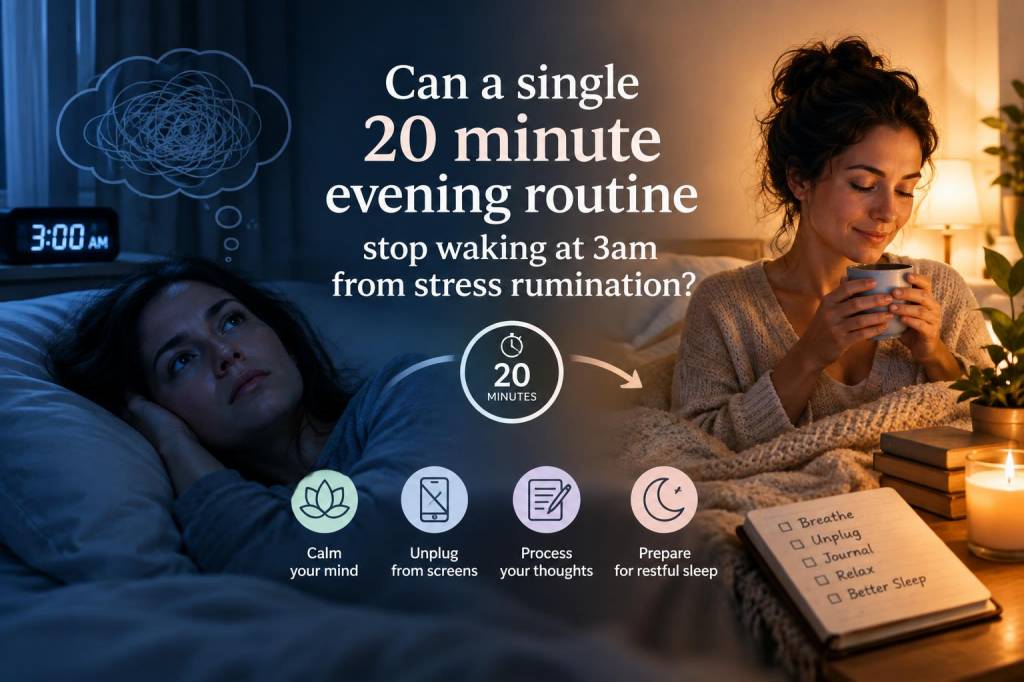
I used to wake at 3am most nights. It started as an occasional annoyance and turned into a predictable, frustrating ritual: my mind would flip on, replaying conversations, reweighing decisions, and inventing future problems. After months of broken sleep I experimented with a variety of fixes—longer workouts, evening journaling, herbal teas, even white-noise machines. What finally made a consistent difference wasn't a single miracle product but a deliberately structured 20-minute evening routine that I did almost every night for several weeks. It didn’t cure every night immediately, but it drastically reduced the nights I woke at 3am because of stress rumination.
Why 3am rumination is so common
First, a bit of context: waking up in the middle of the night and getting stuck in anxious thoughts is a well-documented pattern. During the first few hours of sleep, deep slow-wave sleep turns into lighter REM sleep where dreaming and emotional processing happen. If your brain hasn’t had an opportunity to offload worry and organize the day’s mental “to-do” list, it can bring those concerns front and center in the middle of the night.
Stress hormones, irregular sleep schedules, and stimulant use (caffeine or late nicotine) can increase the chance of mid-sleep wakefulness. But even with good sleep hygiene, an overactive mind can hijack your night. That’s where a short, intentional wind-down routine can help: it signals to your brain that the day’s problem-solving time is over and provides practical outlets for worry.
Why I chose 20 minutes (and why shorter works)
Twenty minutes feels manageable on busy evenings. It’s short enough that you don’t resist it, but long enough to create a meaningful behavioral cue. Neuroscience on habit formation suggests consistent, small rituals build stronger neural associations than sporadic long interventions. In other words, I was aiming for something I’d actually do every night.
Importantly, the routine targets three things: physical relaxation, cognitive offloading, and a gentle shift in arousal state toward sleep. You can adapt the components to your preferences—what matters is the sequence and consistency.
My 20-minute routine (step-by-step)
Here’s the routine I followed. I timed it and refined it several times to land around 20 minutes. If you try it, treat this as a template rather than a rigid blueprint.
I start seated in a quiet corner or on the edge of the bed. Five minutes of diaphragmatic breathing (4–6 breaths per minute) lowers heart rate and signals safety. I inhale for 4, hold 1, exhale for 6. I learned this pattern from work with breathing apps like Wim Hof Companion and Calm, but you can time it with a simple watch. This is not a meditation battle; it’s controlled breathing to calm the nervous system.
I keep a small notebook and a pen by the bed. For seven minutes I do a rapid capture: lists of anything that’s on my mind—tasks, worries, ideas, things to check tomorrow. The goal is not to write eloquently, it’s to move the material from active working memory into an external place. Research shows that offloading reduces intrusive thoughts and improves sleep onset.
I use three short prompts: “Today I’m worried about…”, “Tomorrow I need to…”, and “One small action I can take tomorrow is…”. That last prompt reframes worry into a single, concrete behavior which reduces uncertainty-driven rumination.
Next I spend four minutes intentionally listing two things that went well today and one small win. This balances the negative bias that fuels rumination. It doesn’t require grand achievements—an enjoyable conversation, a meal that hit the spot, finishing an email count. The positive listing helps the brain close the narrative of the day.
In the final minutes I dim any lights (blue-light free is ideal), set my bedroom temperature a little lower if needed, and use a consistent scent or sound if that helps—lavender pillow spray or a 15-minute guided sleep track from apps like Headspace or Insight Timer. I lie down with the lights off and do one final breathing cycle to connect the routine to sleep readiness.
Why each piece matters
Breathing directly affects the autonomic system and is the fastest lever we have to lower physiological arousal. Journaling removes cognitive clutter; it’s not about solving every problem, it’s about acknowledging and logging them so the brain stops replaying. The positive reframe counters the negativity loop that rumination loves. Sensory cues create a conditioned response so your body learns that this sequence predicts sleep.
What I adjusted after a few weeks
After three weeks, I tracked nights I woke at 3am. The frequency dropped by about 70%. I still had occasional wake-ups during periods of high stress—that’s realistic. When it happened, I found a few tweaks helped:
I added a 10-minute “worry window” midday where I allowed myself to think through problems—this reduced the brain’s need to process at night.
Keeping screens off 60 minutes before bed reduced cognitive stimulation and blue light exposure, making the 20-minute routine more effective.
On nights when I felt particularly tense, I swapped the initial breathing for a 4-minute progressive muscle relaxation sequence. It helped when my jumps in arousal were more physical than mental.
Common questions people ask
Will this work for everyone? No single routine works for every person. But the principles—reduce physiological arousal, externalize worries, create a positive closure, and use consistent sensory cues—are broadly effective. You may need to adjust timing and content.
What if I wake up anyway? Don’t panic. Try a brief 2–5 minute version of the cognitive offload—write down the thought and one small action—or use a focused breathing pattern. Avoid checking your phone; that tends to cement wakefulness.
Do I need products? Not really. I used a small notebook and a dimmable bedside lamp. Apps and scents can help but aren’t necessary. If you like tech, smart lights (Philips Hue) and sleep playlists (Spotify sleep playlists, Calm) can make the cueing easier.
Quick checklist to get started tonight
I don’t pretend this is a complete cure for chronic insomnia or severe anxiety—those often need clinical support. But if your 3am wake-ups are mostly due to stress rumination, a short, consistent 20-minute routine can change the way your nights unfold. It gave me back large chunks of uninterrupted sleep and the mental space to face the next day with more calm than I used to.