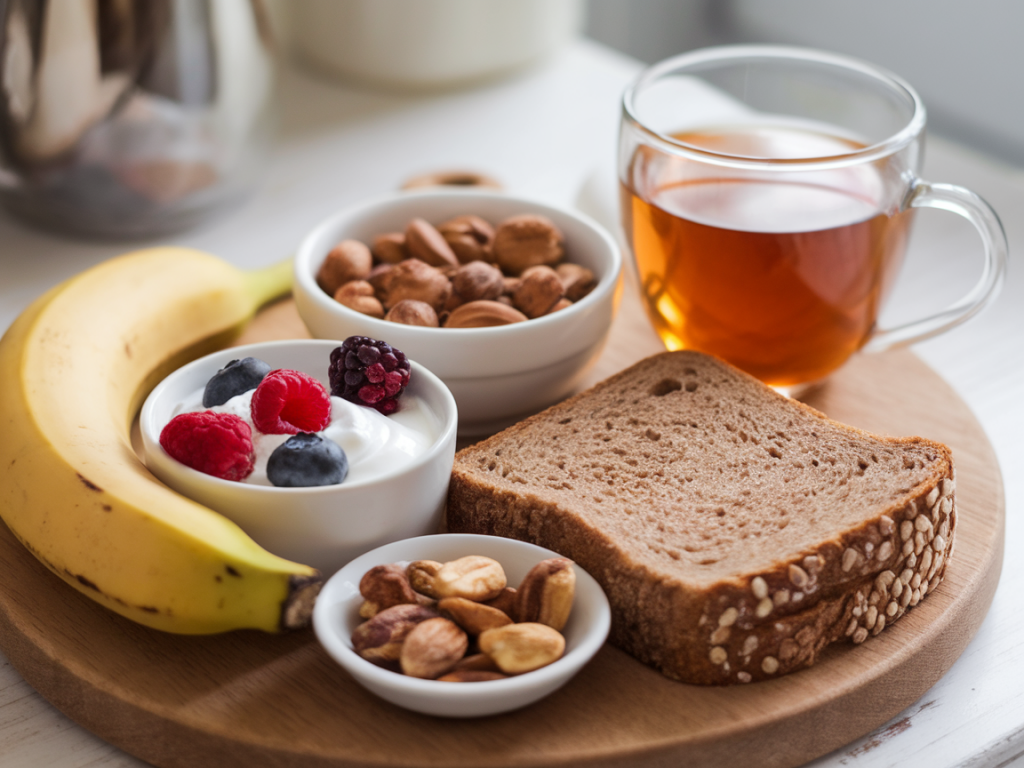
I’ve experimented with bedtime snacks for years—both in my own life and with clients—and one clear pattern keeps showing up: the right mini-meal before bed can improve sleep depth and continuity, but the wrong one can leave you restless, wired or waking up hungry. In this piece I’ll walk you through which snacks tend to support deep sleep without causing big insulin spikes, how much to eat, which combos work best, and when to time them so they help rather than hinder your night.
Why a small bedtime snack can help sleep (but not always)
There are a few reasons a light snack at night can improve sleep. First, certain nutrients—like tryptophan (an amino acid), magnesium and complex carbohydrates—can support the production of neurotransmitters (serotonin, melatonin) involved in sleep regulation. Second, a modest combo of protein and low-glycemic carbs can prevent the blood sugar dips that sometimes wake people up in the early hours.
But the caveat is important: large meals or high-sugar foods cause a big insulin response and often lead to interrupted sleep, vivid dreams, or trouble falling asleep. So the goal is a small, balanced snack that provides the sleep-promoting nutrients without triggering a large glycemic load.
Key principles I follow (and recommend)
- Keep portions small. Think 100–250 calories, not a full meal.
- Combine protein with a low-GI carbohydrate and a bit of fat. This mix blunts blood sugar spikes and provides tryptophan transport to the brain.
- Prefer whole foods. Avoid sugary desserts, pastries and fruit juices right before bed.
- Time it right. Aim for 30–90 minutes before lying down. That gives digestion time without being so late it disrupts sleep.
- Watch caffeine and alcohol. Both alter sleep architecture; even small amounts of alcohol reduce deep (slow-wave) sleep.
Which nutrients help—and why
Here are the sleep-supportive nutrients I look for:
- Tryptophan: An amino acid found in dairy, turkey, eggs and nuts. It’s a precursor to serotonin and melatonin.
- Complex carbohydrates: Oats, wholegrain crackers or a small banana can raise insulin slightly, which helps tryptophan enter the brain—but you want a slow, modest rise, not a spike.
- Magnesium: Found in nuts, seeds and leafy greens; it supports relaxation and muscle function.
- Protein: A small amount (5–15 g) stabilizes blood sugar overnight.
- Healthy fats: A little fat slows absorption and prevents rapid blood sugar swings.
Practical snack combos I recommend
Below are snacks I frequently suggest to clients and use myself. Portions are tuned to be small enough to avoid heavy insulin responses while still providing sleep-friendly nutrients.
| Snack | Portion | Why it works |
|---|---|---|
| Greek yogurt + 1 tbsp chopped walnuts | 150 g yogurt + 1 tbsp (7 g) walnuts | Protein + magnesium & healthy fat; low sugar if you choose plain yogurt |
| Cottage cheese + cucumber slices | 100 g cottage cheese | Slow-digesting protein (casein) supports satiety without spike |
| Whole grain cracker + 1 tbsp peanut butter | 2 small crackers + 1 tbsp PB | Low-GI carbs + protein/fat; keeps blood sugar steady |
| Small banana + 1 tsp almond butter | 1 small banana + 1 tsp (5 g) almond butter | Banana supplies modest carbs and potassium; nut butter adds fat/protein |
| Oat porridge (mini) | 30 g oats with water + splash of milk | Complex carbs with minimal portion size; can be mixed with a few seeds |
| Turkey or chicken slices + pickles | 40–60 g lean poultry | Tryptophan-rich lean protein, low carbs |
| Warm milk (dairy or fortified plant) | 150–200 ml | Comforting, provides tryptophan and small protein dose |
Portion guidance and macronutrient targets
As a rule of thumb I aim for snacks in this range:
- Calories: 100–250 kcal
- Protein: 5–15 g
- Carbohydrates: 10–25 g (preferably low-GI/complex)
- Fat: 3–10 g
If you’re someone with diabetes or insulin resistance, the emphasis should be on lower carbs and slightly higher protein/fat to avoid unpredictable glucose responses. In that case consider 15–20 g protein + 5–10 g carbs (e.g., cottage cheese and a few berries).
Timing: when to eat for best effect
I usually recommend eating 30–90 minutes before your planned lights-out. Here’s why:
- Within 30 minutes gives the feeling of satiety at bedtime without going to bed too full.
- Up to 90 minutes allows a little digestion so you’re comfortable and not waking from gastric activity.
If you’re prone to acid reflux, push the snack earlier (90–120 minutes) and avoid fatty or spicy items that can worsen reflux when supine.
Foods and snacks to avoid before bed
- High-sugar desserts, candy and sugary cereals—these spike blood sugar and then cause drops that can wake you up.
- Large meals—heavy, high-fat meals can fragment sleep and increase reflux.
- Caffeinated items (chocolate, coffee, some teas)—caffeine has a long half-life for many people and reduces deep sleep.
- Alcohol—it may help you fall asleep faster but reduces slow-wave (deep) sleep and increases wake after sleep onset.
Quick tips from my experiments
- I keep a small tub of plain Greek yogurt and a bag of mixed nuts at home—easy to combine when I need a pre-sleep bite.
- If I’m having oats, I use only 20–30 g rolled oats with water and a pinch of cinnamon; that gives comforting carbs without excess.
- Brands matter less than ingredients—choose unsweetened, high-protein dairy or plant options (e.g., Fage Total 0% or a high-protein plain skyr) rather than flavored varieties packed with added sugar.
If you want, I can create a one-week bedtime snack plan tailored to your calorie needs, dietary restrictions (vegan, lactose-free, low-carb), or blood sugar goals—just tell me your preferences and wake-up patterns and I’ll draft it.