Nutrition

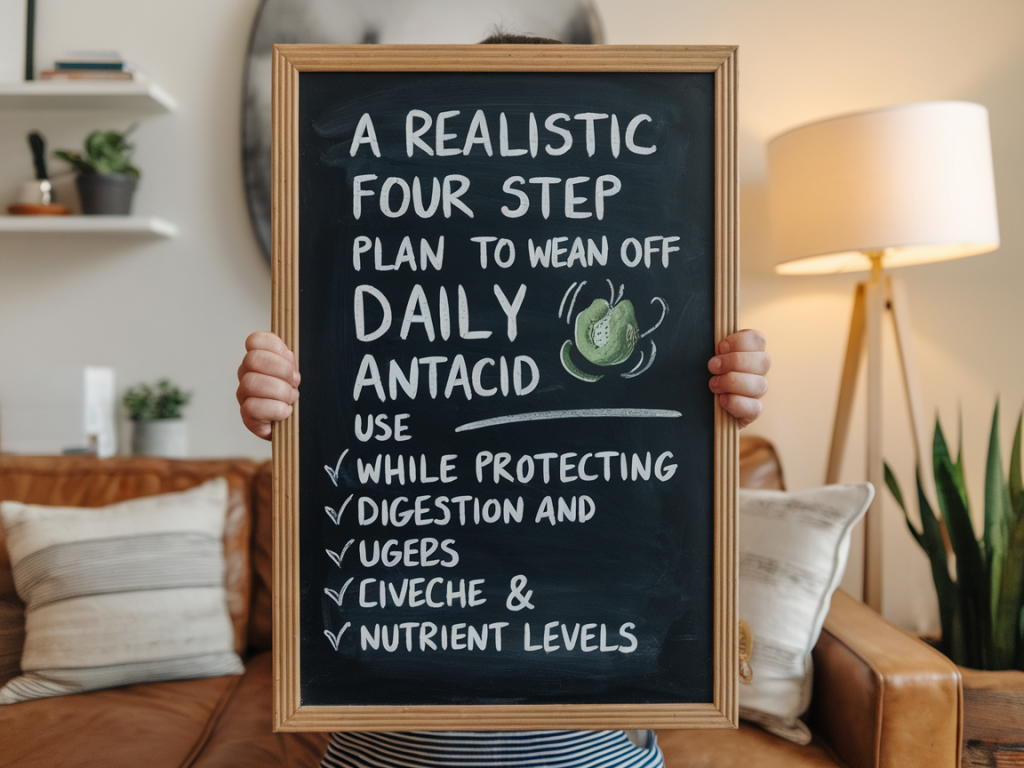
A realistic four-step plan to wean off daily antacid use while protecting digestion and nutrient levels

A realistic four-step plan to wean off daily antacid use while protecting digestion and nutrient levels

I used to reach for antacids almost reflexively. A long day, a heavy meal, stress — and a chewable tablet or a sip of liquid would calm the burn. Over time that small habit crept into a daily routine. It wasn’t until I started reading the research and speaking with clinicians that I realised daily use can blunt digestion, alter nutrient absorption, and sometimes mask underlying issues. If you’re thinking about cutting back, here’s a realistic, four-step plan I developed and tested on myself and with several clients. It focuses on tapering safely, protecting nutrient status, and improving the root causes of reflux and dyspepsia.

Step 1 — Understand what you’re taking and why it matters

Before changing anything, get clear on the type of medication you’re using and the reason you take it. There are three common families:

  • Antacids (Tums, Rennie, Gaviscon) — neutralise stomach acid quickly but briefly.
  • H2 blockers (famotidine/Pepto Hista? famotidine often known as Pepcid in the US) — reduce acid production for several hours.
  • Proton pump inhibitors (PPIs) (omeprazole, lansoprazole, esomeprazole — brands like Losec, Nexium) — substantially reduce acid production for a longer period.
  • Daily PPIs or frequent antacid use can lead to rebound acid hypersecretion when stopped abruptly, and longer-term PPI use has been associated with lower absorption of certain nutrients (vitamin B12, magnesium, iron, and calcium) and changes in gut microbiota. That doesn’t mean everyone must stop PPIs — they’re lifesaving for people with severe erosive oesophagitis or Barrett’s — but for many folks using them for mild, intermittent symptoms, a directed plan to step down can be appropriate.

    Step 2 — Plan a measured taper (don’t quit cold turkey)

    Rebound can make you feel worse if you stop suddenly, especially after weeks or months of daily PPIs. Here’s a practical taper framework I’ve used; adapt it to your starting medication and symptom severity, and discuss it with your prescriber if you’re on prescription PPIs.

  • If you’re on daily antacids: begin by cutting dose frequency. If you take them twice daily, reduce to once daily for two weeks, then every other day for two weeks, then as needed. Swap fast-acting antacids for alginate-containing options (Gaviscon) which form a physical barrier and may reduce episodes without massively changing acid levels.
  • If you’re on a PPI: switch to every-other-day dosing for two weeks. If symptoms are manageable, extend every-other-day for another two weeks, then transition to an H2 blocker at night or as needed. If symptoms spike, temporarily add an antacid for breakthrough only, then resume taper.
  • If you’re on an H2 blocker: reduce dose or frequency (for example, take half a tablet or every other day) while tracking symptoms. H2 blockers are less associated with rebound than PPIs, but monitor for nocturnal acid breakthrough.
  • Keep a simple diary: note timing of symptoms, foods eaten, stress level, sleep quality, and any medication taken. This will help identify triggers and measure progress.

    Step 3 — Protect digestion and nutrient levels while you taper

    When stomach acid is reduced, certain nutrients are less well absorbed and overall digestion can suffer. I prioritised five practical protections during my taper:

  • Optimize eating habits: chew thoroughly, avoid large meals before bed (finish eating 2–3 hours before lying down), and slow down at meals. Smaller, more frequent meals can reduce pressure on the lower oesophageal sphincter.
  • Target trigger foods: common offenders include high-fat meals, chocolate, caffeine, alcohol, mint, citrus, tomatoes and spicy foods. You don’t need a permanent restriction — treat identification as temporary experimentation to break the cycle.
  • Support nutrient absorption: get baseline blood tests if you’ve been on daily PPIs for months (B12, magnesium, iron studies, calcium/Vit D as appropriate). Consider B12 supplementation if levels are low — oral methylcobalamin or cyanocobalamin daily is effective for most people. If magnesium is low, magnesium citrate or glycinate 200–400 mg daily is commonly used, but check with your clinician.
  • Try digestive aids: if you have low gastric acid symptoms (bloating right after meals, undigested food in stools) a short trial of betaine HCl with pepsin under medical supervision can help some people. Digestive enzymes (with meals) and bitters before meals may improve digestion for others. These are tools to be tried cautiously — not a long-term substitute for addressing triggers.
  • Use targeted supplements for mucosal health: probiotics (Lactobacillus rhamnosus, Bifidobacterium species) can help restore microbial balance, and a daily probiotic with ≥10 billion CFU is reasonable. Deglycyrrhizinated licorice (DGL) chewables or alginate products can soothe the oesophagus without altering acid chemistry.
  • Step 4 — Address root causes with lifestyle changes

    Reducing medication is only part of the story. I found the biggest wins came from changing day-to-day factors that fuel reflux and dyspepsia.

  • Weight and waist management: even 5–10% weight loss if overweight reduces reflux episodes by lowering abdominal pressure.
  • Improve sleep and sleep position: elevate the head of the bed 6–8 inches or use a wedge pillow to reduce nocturnal reflux. Avoid late-night heavy meals and alcohol.
  • Manage stress: stress increases perception of reflux and can slow digestion. I use brief daily practices — 10 minutes of breathwork, a short walk after meals, or a bedtime wind-down routine — and I encourage clients to try CBT-based techniques for chronic symptom distress.
  • Core strengthening and posture: improving core support and avoiding tight belts or waistbands reduces pressure on the stomach. Gentle yoga or Pilates can help with posture and diaphragmatic tone, which supports the lower oesophageal sphincter.
  • Monitoring, safety and when to seek help

    Tapering should feel doable, not dangerous. Reach out to your GP or gastroenterologist if you experience any of the following:

  • Sustained or worsening difficulty swallowing (dysphagia).
  • Unintended weight loss, ongoing vomiting, or signs of GI bleeding (black stools or vomiting blood).
  • Severe upfront pain or chest pain that could be cardiac in nature — seek emergency care.
  • If you’re currently on a prescription PPI, discuss any plan with your prescriber and ask for blood tests after several months if you successfully reduce or stop therapy. I recommend checking vitamin B12, magnesium and iron indices if you’ve been on long-term acid suppression.

    Quick reference table — nutrients affected and practical steps

    Nutrient Why acid mattersPractical steps
    Vitamin B12Acid releases B12 from food proteins for absorptionTest B12; consider oral supplements (1000 mcg daily) if low; B12 injections if deficiency severe
    IronAcid converts ferric to ferrous iron, aiding absorptionTest ferritin/hemoglobin; take iron supplements if low; take with vitamin C to boost absorption
    MagnesiumAbsorption may decrease with long-term PPIsCheck serum magnesium; consider magnesium glycinate/citrate 200–400 mg if low
    CalciumSome evidence suggests altered absorption, esp. with osteoporosis riskEnsure dietary calcium and vitamin D; discuss bone density screening if long-term PPI

    Tapering off daily antacid use doesn’t have to be an all-or-nothing ordeal. For me, taking a measured approach — understanding the medication, tapering slowly, protecting nutrients, and fixing lifestyle drivers — made the difference between a rebound flare and lasting change. If you try this plan, track your symptoms, stay in touch with your clinician, and know that small, consistent adjustments often produce the biggest, most sustainable gains.

    You should also check the following news:

    Exactly what to eat after an evening strength session to build muscle without wrecking sleep
    Nutrition

    Exactly what to eat after an evening strength session to build muscle without wrecking sleep

    I just finished a heavy evening strength session — legs were on fire, my back is pleasantly sore,...

    Aug 04 Read more...