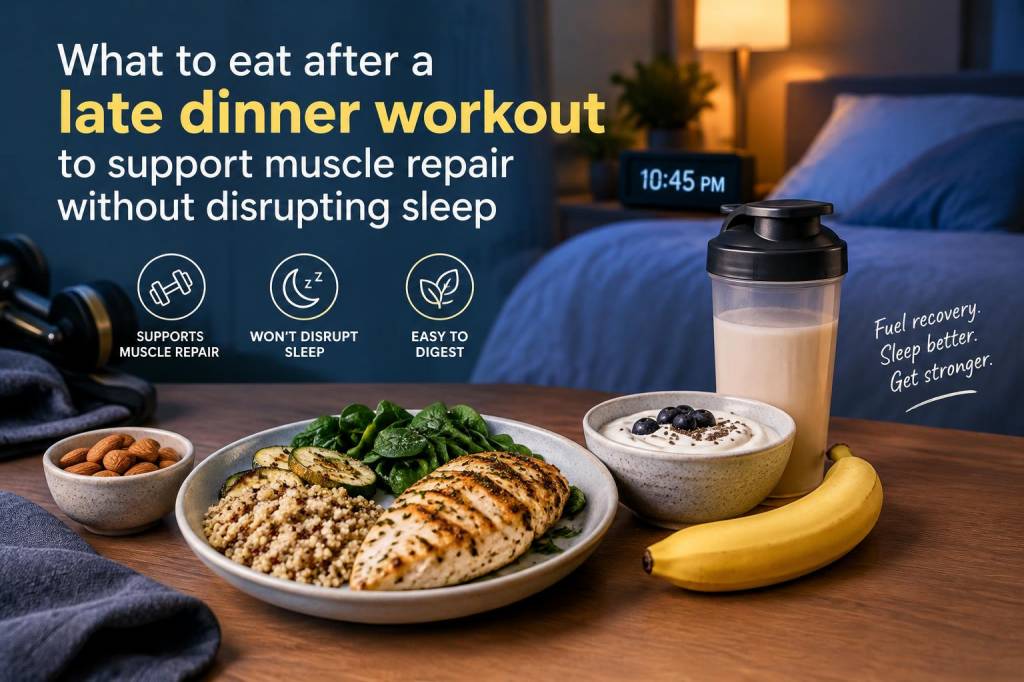
After a late dinner workout, I usually care about two things at once: giving my muscles what they need to recover and keeping my sleep as undisturbed as possible. That balance matters more than people often realize. If I eat too little, I may wake up feeling flat, sore, or unusually hungry. If I eat too much, or choose something too heavy, I can feel uncomfortable in bed and sleep less deeply. Over time, I have learned that a smart post-workout meal at night is less about eating as much as possible and more about choosing foods that are easy to digest, protein-rich, and calming for the body.
My approach is simple. I want enough protein to support muscle repair, a moderate amount of carbohydrate to refill energy stores, and a meal size that feels comfortable within my bedtime window. I also pay attention to fat, spice, and portion size because those factors can make a late meal feel heavy. When I get this right, I tend to sleep better and wake up less stiff, less hungry, and more ready to train again.
What my body needs after evening training
After exercise, muscle tissue is in a state where repair and rebuilding are active. Protein provides amino acids, which are the raw materials my body uses for that repair process. If my workout was hard, especially if I did strength work, intervals, or a long session, I make protein a priority. I do not need a huge amount in one sitting, but I do want enough to trigger muscle protein synthesis.
I also think about carbohydrate. If I trained late and still want decent recovery, I usually benefit from some carbs to restore glycogen and help me feel settled. Carbs can also support sleep for many people when they are eaten in a sensible portion and paired with protein. I do not treat carbohydrate as something to fear at night. In fact, a small or moderate serving can make a post-workout meal feel more complete and satisfying.
Fat is useful too, but I keep it moderate after a late workout. Too much fat can slow digestion and make me feel overly full when I am trying to wind down. That does not mean I avoid fat entirely. It just means I choose foods that are naturally balanced rather than greasy or very rich.
My sleep-friendly nutrient priorities
When I build a late dinner workout meal, I focus on a few priorities:
- Protein: enough for repair, usually from lean, easy-to-digest sources.
- Carbohydrate: a moderate portion to replenish energy and support relaxation.
- Gentle digestion: fewer fried foods, heavy cream sauces, and very large portions.
- Hydration: enough fluid to recover, but not so much that I wake up repeatedly during the night.
- Consistency: foods I know sit well with my stomach after training.
This is where personal experience matters. Some people can eat a larger meal close to bed and sleep fine. Others feel reflux, bloating, or restlessness. I have found that paying attention to my own response is more useful than following a rigid rule.
Foods I reach for after a late workout
When I want something practical, satisfying, and sleep-friendly, I tend to choose combinations like these:
- Greek yogurt with banana and a small handful of oats
- Cottage cheese with berries and toast
- Chicken or tofu with rice and steamed vegetables
- Eggs with potatoes and sautéed spinach
- Salmon with quinoa and soft-cooked greens
- Protein smoothie with milk, fruit, and a small spoon of nut butter
- Turkey wrap with avocado, lettuce, and a simple side of fruit
These meals work well for me because they combine protein with easy-to-digest carbohydrate. They also avoid the kind of excess richness that can make me feel sluggish in bed. I especially like warm, simple meals after a workout because they feel grounding without being too heavy.
If I know I have eaten a fairly full dinner before training, I sometimes do not need a complete meal afterward. In that case, a smaller snack can be enough. A glass of milk, a yogurt bowl, or a protein shake with fruit can be a smart bridge between recovery and sleep.
Portion size matters more than people think
I have learned that a late meal does not need to be large to be effective. In many cases, a moderate portion does the job better than a huge one. A meal that is too big can leave me physically uncomfortable, and discomfort is rarely a friend of sleep. I prefer to stop eating while I still feel light enough to relax.
A simple way I judge portion size is by asking whether I feel nourished but not stuffed. If I am training late and still have a long gap before bed, I can eat a little more. If I am eating within an hour of lying down, I choose a smaller meal with simpler ingredients.
I also notice that very high-fiber meals late at night are not always ideal for me. Fiber is important overall, but after a workout close to bedtime, an enormous salad or a very bean-heavy meal can be a bit much. I usually save some of those foods for earlier in the day and keep my nighttime recovery meal easier on digestion.
What I try to limit before sleep
I do not believe late-night eating is automatically harmful. Still, some foods make recovery and sleep harder for me, so I limit them when possible:
- Very spicy food, which can trigger discomfort or reflux
- Deep-fried meals, which often feel heavy and slow to digest
- Large amounts of chocolate or caffeine, which can interfere with sleep quality
- Very sugary desserts eaten right after training, especially if I am already wired
- Alcohol, which can disrupt sleep even if it makes me feel sleepy at first
- Huge portions of cheese-based or cream-based dishes
Even when a food is nutritious on paper, I still ask whether it supports both recovery and rest. A meal can contain good ingredients and still be the wrong choice at night if it leaves me too full or too alert.
My timing strategy after a late session
Timing is not about perfection. I aim to eat within a reasonable window after training, usually once my breathing has settled and I have had time to cool down. I do not rush straight into a huge meal while I am still overheated or extremely stimulated. A brief transition helps me eat more mindfully and digest more comfortably.
If I train very late, I often prefer a smaller recovery meal rather than a full dinner. That meal might include protein, a carbohydrate source, and a little fluid, but it stays simple. If I finish training a bit earlier, I may be able to eat a more complete plate and still have enough time before bed to digest it.
I also keep in mind that sleep matters as much as nutrition for recovery. If a meal is so large that it shortens my sleep or makes it fragmented, I do not view that as a win, even if it seemed optimal for muscle repair on paper. Recovery is a whole-body process, and sleep is part of that process.
A practical late-night recovery table
| Situation | What I usually eat | Why it works |
|---|---|---|
| Very hard strength session | Chicken, rice, and vegetables | Strong protein support with steady carbohydrate |
| Short workout close to bed | Greek yogurt with fruit | Light, fast, and easy to digest |
| Cardio or intervals at night | Protein smoothie with banana and oats | Simple recovery without heaviness |
| Workout after an early dinner | Cottage cheese with toast and berries | Small top-up that supports repair |
| Late session with low appetite | Milk, protein shake, or yogurt drink | Useful when solid food feels unappealing |
When I want to sleep better after eating
I pay attention to a few habits beyond food itself. I keep the meal calm and unhurried. I avoid lying down immediately after eating if I can help it. I drink enough water during the session so I do not need to chug a lot right before bed. I also keep lighting low and reduce stimulation after the workout so my body can shift out of training mode.
If I feel overly hungry after evening exercise, I usually choose a meal with enough protein and carbohydrate instead of trying to “save calories” for later. Going to bed hungry can make me restless and can even wake me in the night. At the same time, I do not force a giant plate just because I trained. I try to meet my body where it is.
For me, a successful late dinner workout meal often feels boring in a good way: simple, balanced, and easy to digest. That is usually what my body wants when I am trying to repair muscle without sacrificing sleep quality. A warm bowl of rice with lean protein, a yogurt bowl with fruit, or a small sandwich with a glass of milk can do a lot of work without turning bedtime into a digestive battle.
I also like to think in terms of patterns rather than single meals. If I train late once in a while, one imperfect meal will not matter much. What matters more is the habit I repeat over time. When I consistently choose recovery foods that sit well and let me sleep deeply, I notice better training energy, better mood, and less stiffness the next day.
One detail I never ignore is individual tolerance. Some people digest dairy well at night and others do not. Some sleep well after oats, while others feel too full. Some people want a savory meal, while others prefer something light and sweet. I encourage readers to experiment with a few options and notice what helps them feel both restored and settled. That personal data is often more useful than any generic rule.