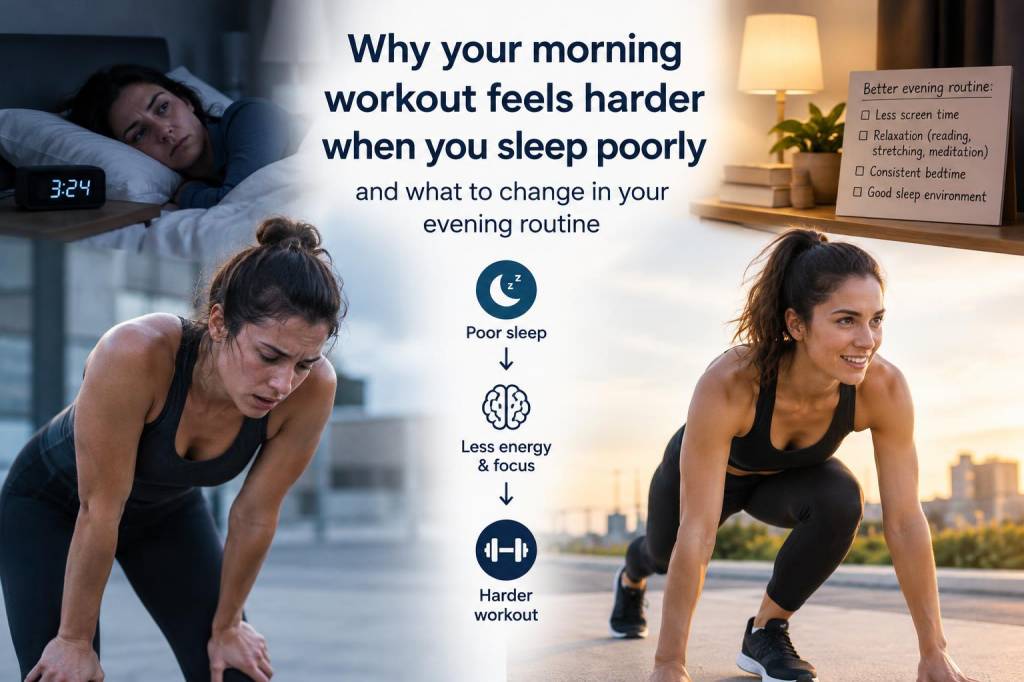
I have noticed a pattern in myself and in many people I work with: after a poor night of sleep, a morning workout can feel strangely heavy, even when the session was easy the day before. Your legs feel slower, your heart rate climbs sooner, your coordination slips, and motivation can drop before you have even tied your shoes. That is not just in your head. Sleep affects nearly every system that supports exercise, from energy production and muscle repair to focus and pain tolerance.
When I started paying closer attention to my own sleep and training, I realized that an “off” morning was often linked to something that happened much earlier, usually in the evening. A late meal, too much screen time, an intense workout too close to bed, or a stressful bedtime routine could leave me dragging the next day. Once I started adjusting my evening habits, my morning sessions felt smoother, stronger, and far less forced.
Why poor sleep makes exercise feel harder
Sleep loss changes both body and brain. Physically, poor sleep can reduce muscle glycogen restoration, which means your main fuel reserve may not be fully replenished. That matters most if you plan to lift, run, cycle, or do interval work in the morning. Mentally, sleep deprivation affects attention, reaction time, and decision-making, so even simple movement can feel more effortful. I have had mornings where my body could do the workout, but my mind kept saying it was harder than it really was.
There is also a clear effect on perceived exertion. After short or fragmented sleep, the same pace, weight, or interval can feel tougher than usual. Your body may also produce more stress hormones, which can make you feel tense rather than ready. If you wake up already feeling wired, flat, or restless, a morning workout may feel like starting a race before your engine has fully turned on.
Inflammation and recovery play a role as well. Good sleep supports tissue repair and nervous system recovery. Poor sleep can leave you with more soreness, less resilience, and a lower tolerance for training stress. I often tell people that the problem is not only about energy. It is about readiness. Sleep is part of the preparation, not just the recovery.
What I notice in my own body after a rough night
When I sleep poorly, I can usually feel it before the workout even begins. My warm-up takes longer to feel natural. My breathing feels less smooth. Movements that are normally automatic require more focus. If I train strength, I may need longer rest between sets. If I train cardio, my pace can feel harder than expected even at a moderate effort.
I also notice more cravings later in the day after a poor night, which can indirectly affect training too. Low sleep often makes me more likely to reach for quick energy rather than steady fuel. That can lead to a cycle: poor sleep, sluggish workout, rushed food choices, and another night of disrupted recovery. The good news is that this cycle can be broken with a few changes in the evening routine.
What to change in your evening routine
The biggest improvements usually come from making bedtime more predictable and less stimulating. I do not try to create a perfect routine. I aim for a repeatable one that lowers arousal and helps my body understand that the day is ending.
- Set a consistent sleep window: I try to go to bed and wake up at similar times, even on busy weeks. Regular timing helps regulate your internal clock, which makes both sleep and morning training feel more stable.
- Reduce bright light in the last hour: I dim lights and lower screen brightness before bed. Bright light late at night can delay sleep onset and make sleep feel lighter.
- Stop intense exercise too late: Hard evening sessions can leave your nervous system activated. If I must train later, I keep it moderate and leave enough time to cool down.
- Finish dinner earlier when possible: A very heavy meal close to bed can interfere with sleep quality. I do better with an earlier dinner or a lighter evening meal if I know I will train in the morning.
- Limit alcohol: Even small amounts can fragment sleep and reduce next-day recovery. I have learned that a drink late in the evening often costs me more than I expect the next morning.
- Create a short wind-down ritual: Reading, stretching, journaling, or a quiet shower can help shift the body toward rest. I like routines that are simple enough to repeat without effort.
Food and drink choices that affect morning training
What I eat and drink in the evening has a bigger effect on sleep than many people realize. Caffeine is the most obvious example. Even if I drink coffee earlier in the afternoon, I sometimes still feel its effect at night. If sleep has been fragile, I become stricter about caffeine timing and cut it off earlier in the day.
Hydration matters too. Going to bed dehydrated can leave me waking up groggy, but drinking too much right before bed can fragment sleep with bathroom trips. I aim to drink steadily through the day rather than trying to catch up late at night. That small habit has made my mornings feel more consistent.
If I train in the morning, I also think about glycogen. An evening meal with a good balance of protein, carbohydrates, and healthy fats can support recovery and make the next workout feel less punishing. I do not chase extreme carb loading for everyday training, but I do notice a difference when I under-eat. A body that is under-fueled overnight often wakes up reluctant to move.
How stress in the evening shows up in the morning
Stress is one of the most underestimated reasons a morning workout feels bad. I have had nights where I technically got enough hours in bed, yet I still woke up feeling unready. Usually, that was because my mind had stayed active too late. Answering messages, thinking about work, or replaying the day can keep the nervous system in a state that is not ideal for sleep.
When evening stress is high, I try to make the transition to sleep more deliberate. I stop checking work messages, write down unfinished tasks, and give myself a few minutes to breathe slowly. Even five to ten minutes can help me move from “doing mode” into “rest mode.” The point is not to eliminate stress completely. It is to stop carrying it into sleep.
When to modify the morning workout instead of forcing it
I do not believe every poor night should cancel a workout. In many cases, gentle movement is exactly what helps. But I do think it is smart to adjust the plan instead of pretending sleep loss does not matter. If I wake up exhausted, I may reduce intensity, shorten the session, extend the warm-up, or switch from intervals to a steady effort.
That choice is not laziness. It is training intelligence. A body that has not recovered well is already under strain, and a hard workout can feel less productive than a lighter one done with good form and focus. I have learned to ask a simple question: do I need to train hard today, or do I need to train wisely today?
| Evening habit | Likely sleep effect | Morning workout impact |
|---|---|---|
| Late caffeine | Harder to fall asleep, lighter sleep | Higher effort, lower focus |
| Heavy late meal | Restless sleep, digestion disruption | Slower start, less comfort during exercise |
| Bright screens near bedtime | Delayed sleep and reduced sleep depth | Sluggish energy and lower motivation |
| Late intense training | Higher alertness, delayed recovery | Stiffer body, lower readiness |
| Calm wind-down routine | Faster sleep onset, better recovery | Smoother warm-up and better performance |
Small evening changes that made a real difference for me
The changes that helped me most were not dramatic. I started protecting the last hour before bed. I made my room cooler and darker. I reduced late-night scrolling. I stopped treating sleep like an afterthought. Once I did that, I began waking up with more stable energy and less resistance to training.
I also became more honest about my limits. On nights when sleep was clearly poor, I stopped expecting personal bests the next morning. Instead, I focused on consistency, movement quality, and simply showing up. That mindset reduced frustration and made exercise feel more sustainable.
What surprised me most was how much the evening routine changed the next day without changing the workout itself. The same session felt different because my recovery foundation had improved. That is what sleep really does: it shapes the experience of effort before the effort even begins.
Signals that your evening routine needs attention
- You often wake up unrefreshed even after enough hours in bed.
- Your morning workouts feel harder than they used to at the same intensity.
- You need much longer to feel warm and coordinated.
- You feel wired at night but flat in the morning.
- You rely on caffeine early and often just to start moving.
- You notice more soreness, irritability, or brain fog after poor sleep.
If those patterns sound familiar, I would start with one or two evening changes rather than trying to overhaul everything at once. I have found that a consistent bedtime, less screen exposure, and a calmer final hour before sleep can make a surprising difference within a week or two. The goal is not perfect sleep every night. The goal is to give your body a better chance to recover so your morning workout feels like movement, not a battle.