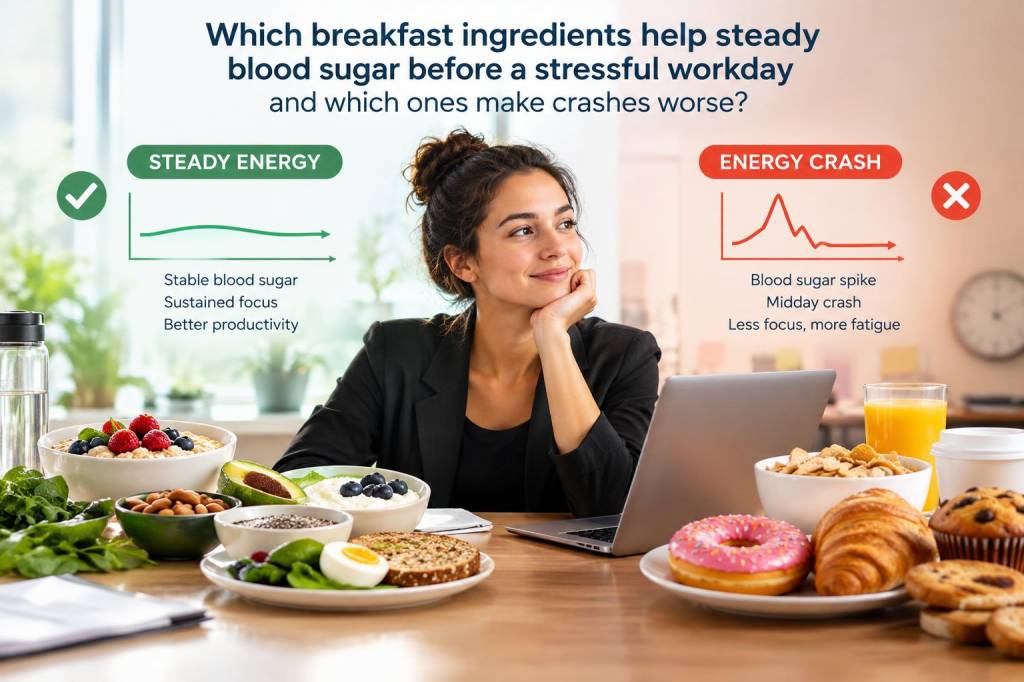
I have learned that breakfast can shape the rest of my morning more than almost any other meal. When I start a stressful workday with a blood sugar spike, I feel it quickly: a burst of energy, a short-lived sense of focus, then irritability, hunger, brain fog, or a shaky need for coffee and snacks. When I build breakfast around ingredients that digest more slowly, I feel steadier, calmer, and much less likely to crash before lunch.
What works for me is not a perfect meal or a strict formula. It is a pattern: enough protein, enough fiber, some healthy fat, and a careful eye on added sugar and refined starches. That combination helps slow digestion, soften the rise in blood glucose, and keep energy more even during a demanding day. When I ignore that pattern, I notice the difference within an hour or two.
What I look for in a breakfast that supports steadier blood sugar
When I want a breakfast that helps me stay level under pressure, I think about ingredients that slow down how fast food leaves the stomach and enters the bloodstream. That usually means building a meal around protein, fiber, and fat rather than making starch or sugar the main event.
Protein is one of the most helpful pieces for me. It does not raise blood sugar much on its own, and it tends to make breakfast more filling. Eggs, plain Greek yogurt, cottage cheese, tofu, smoked salmon, unsweetened protein drinks, and nut butters all help me feel more stable for longer.
Fiber matters just as much. It slows digestion and reduces the speed of glucose absorption. I get it from oats, berries, chia seeds, flaxseed, whole grain bread, bran cereals with low sugar, vegetables, beans, and avocado. The more fiber I include, the less likely I am to feel hungry again too soon.
Healthy fats also help smooth things out. They add staying power and make breakfast feel more satisfying. I often use walnuts, almonds, pecans, chia, flax, avocado, olive oil, or peanut and almond butter. I do not need a huge amount, just enough to slow the meal down a bit.
Breakfast ingredients I reach for more often
Some ingredients consistently work well for me when I know the morning will be stressful, rushed, or mentally demanding.
- Eggs: They are simple, versatile, and protein-rich. I like them because they pair easily with vegetables, whole grain toast, or avocado.
- Plain Greek yogurt: It gives me protein without added sugar. I usually add berries, nuts, and seeds rather than sweetened toppings.
- Oats: Rolled oats or steel-cut oats are a strong choice for steady energy, especially when I combine them with protein and fat.
- Berries: Blueberries, raspberries, blackberries, and strawberries bring fiber and natural sweetness without the sharp sugar load of many breakfast foods.
- Chia seeds: They absorb liquid and create a slower, more filling breakfast texture. I like them in yogurt, oatmeal, or chia pudding.
- Nut butters: Peanut butter, almond butter, and cashew butter can make toast or oats much more balanced.
- Avocado: It adds creaminess, fiber, and fat, which helps slow the meal down.
- Whole grain bread: I prefer it over white toast because it usually has more fiber and a gentler impact on blood sugar.
- Cottage cheese: It is another practical protein option, especially with fruit, seeds, or tomatoes.
- Vegetables: Spinach, mushrooms, tomatoes, peppers, and onions help me turn breakfast into a more balanced meal.
Ingredients that often make blood sugar crashes worse
Some breakfasts taste comforting in the moment but leave me feeling worse shortly after. They are usually high in refined carbohydrates, added sugar, or both, and low in protein and fiber. That combination can cause a quick rise in blood sugar followed by a drop that feels uncomfortable and distracting.
Sugary cereal is one of the clearest examples. Even when it looks fortified or “healthy,” many cereals are still light on fiber and heavy on fast-digesting starches and sugar. If I eat them alone, I am usually hungry again far too soon.
Pastries, donuts, muffins, and sweet rolls are another common problem. They often deliver lots of refined flour and sugar with very little protein. They can feel satisfying at first, but I usually notice the crash later in the morning.
White toast with jam, sweet breakfast bars, sweetened flavored yogurt, and fruit juice can also be tricky. They are easy to overeat because they do not always feel like a full meal, yet they can still send blood sugar up quickly.
Large portions of refined carbohydrates without balance tend to do the most damage. For example, pancakes with syrup alone, a bagel without protein, or a bowl of granola that is more sugar than substance can all leave me tired, hungry, or shaky before lunch.
What I pair together for a steadier morning
I have found that breakfast works best when I stop thinking in single ingredients and start thinking in combinations. A carb is not automatically a problem. It becomes much easier on my body when I pair it with protein, fiber, and fat.
For example, I might have oatmeal with chia seeds, walnuts, and berries. Or I might eat eggs with spinach and whole grain toast. I also like plain Greek yogurt with berries and almonds. These meals feel more balanced because they do not rely on one fast-digesting ingredient to carry the whole plate.
If I am in a rush, I still try to build in balance. A banana alone can leave me hungry quickly, but a banana with peanut butter is a different story. A piece of toast with jam is less likely to cause a spike if I add eggs or cottage cheese. Even a smoothie can work well if I include protein powder, unsweetened yogurt, nut butter, and fiber-rich fruit instead of just juice and fruit.
A simple comparison that helps me choose better
| Breakfast choice | Blood sugar effect | Why it feels better or worse |
|---|---|---|
| Eggs, avocado, whole grain toast | Steadier | Protein, fat, and fiber slow digestion and improve fullness |
| Plain Greek yogurt, berries, chia seeds | Steadier | High protein and fiber, with natural sweetness from fruit |
| Oatmeal with nuts and berries | Steadier | Slow-digesting carbs plus fat and fiber |
| Sugary cereal with low-fat milk | Less steady | Fast-digesting carbs and often little fiber |
| Pastry and sweet coffee drink | More likely to crash | High sugar, refined flour, and little protein |
| Bagel with jam only | More likely to crash | Carb-heavy, low in protein and fiber |
What I notice when stress is already high
Stress changes the picture. On a stressful morning, I often feel more sensitive to blood sugar swings than I do on a calm day. When work pressure is already high, a breakfast that causes a quick rise and fall can feel even more dramatic. I may become impatient, distracted, or mentally fuzzy sooner than expected.
That is one reason I avoid making breakfast too sweet. I still enjoy flavor, but I want it to come from fruit, cinnamon, vanilla, cacao, or savory ingredients instead of a large amount of added sugar. I also try not to skip breakfast if I know I will be in back-to-back meetings or under time pressure. Waiting too long can make me overeat later or grab whatever is easiest, which is usually not what keeps me feeling steady.
On those days, I usually aim for a breakfast that is familiar, easy to digest, and not too heavy. I have found that consistency matters more than novelty. If I know a certain meal keeps me focused until lunch, I do not need to reinvent breakfast every day.
Small adjustments that make a big difference
I do not try to overhaul breakfast overnight. I make small changes that add up. If my usual breakfast is too light, I add protein. If it is too sweet, I reduce the sugary part and increase fiber or fat. If it is too low in volume, I add vegetables or berries. These little adjustments are often enough to improve how I feel all morning.
- I choose plain yogurt instead of sweetened yogurt.
- I add nuts or seeds to fruit or oats.
- I swap white toast for whole grain toast when I can.
- I include eggs, tofu, or cottage cheese more often.
- I keep juice as an occasional choice instead of a daily habit.
- I make coffee less dependent on sugar or syrup for flavor.
I also pay attention to portion size. Even a healthy breakfast can feel off if I eat too much too fast. When I slow down, eat in a calmer setting, and drink water alongside breakfast, I usually feel better for longer. That combination matters more to me than chasing a “perfect” food.
My most reliable breakfast pattern for busy mornings
When I know a stressful day is coming, I usually aim for one protein source, one fiber-rich carbohydrate, and one fat source. That might look like eggs with oats, yogurt with berries and chia, or toast with avocado and smoked salmon. I like that structure because it is flexible, realistic, and easy to repeat.
Breakfast does not need to be elaborate to support steadier blood sugar. It only needs to be balanced enough to keep me from riding a sharp morning wave. For me, that means less sugar on an empty stomach, more protein than I used to eat, and more respect for fiber than I once gave it.