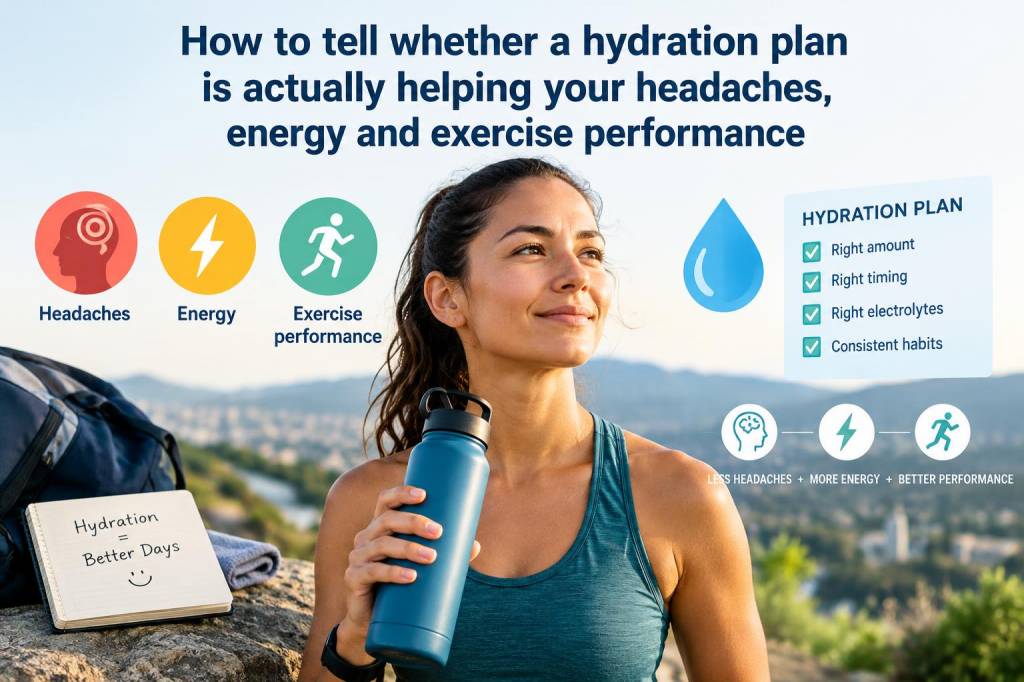
I have learned that a hydration plan is only useful if it changes something I can actually feel, measure, or observe in daily life. For me, that means paying attention to three very practical signals: headache patterns, energy levels, and exercise performance. A plan can look great on paper, but if it does not improve those areas in a realistic way, I treat it as a mismatch rather than a success.
What I look for before judging a hydration plan
Before I decide whether a hydration plan is working, I need a baseline. Without one, I am just guessing. I usually spend at least a few days noticing my normal pattern: when headaches appear, when I feel flat or foggy, how I perform during workouts, and how often I feel thirsty.
I also try not to make too many changes at once. If I increase water, add electrolytes, change caffeine intake, and alter my meals all in the same week, I cannot tell what actually helped. I prefer a simple approach so I can isolate the effect of hydration as much as possible.
For me, a useful baseline includes:
- Headache timing: morning, afternoon, after exercise, or near the end of the day
- Energy stability: whether I stay steady or crash at certain hours
- Workout quality: endurance, perceived effort, and recovery afterward
- Fluid habits: rough daily intake, caffeine use, and salty meals
- Body signals: thirst, dry mouth, darker urine, or lightheadedness
That baseline gives me something honest to compare against once I change my hydration routine.
What headache changes can tell me
Headaches are one of the clearest clues I use. I do not assume every headache is caused by dehydration, because that would be too simplistic. Stress, poor sleep, skipped meals, eye strain, caffeine withdrawal, and illness can all play a role. Still, hydration can matter a lot.
When my hydration plan is helping, I usually notice fewer headaches that feel tied to dryness, heat, long meetings, travel, or exercise. I may also notice that headaches arrive later in the day, feel less intense, or disappear after I drink and rest for a bit.
When hydration is not helping, I see one of several patterns. Sometimes I still get the same headaches at the same time each day. Sometimes I feel a little better right after drinking, but the problem returns quickly. Sometimes I was simply under-fueling, under-sleeping, or overdoing caffeine, and water alone was never going to fix it.
I ask myself a few direct questions:
- Are headaches happening less often than before?
- Are they milder when they do happen?
- Do they show up less during heat, long walks, or workouts?
- Do I recover faster after increasing fluids?
If I answer yes to several of those, I take that as a meaningful sign that the plan is helping.
What energy changes I pay attention to
Energy is more complicated than thirst, because many things affect it. Even so, hydration can influence whether I feel mentally sharp or strangely drained. I watch for the kind of low energy that feels like heaviness, sluggishness, or difficulty concentrating rather than simple tiredness from a busy day.
A hydration plan is probably helping if I notice fewer afternoon slumps, less brain fog, and more stable concentration between meals. I also pay attention to whether I can move through normal daily tasks without feeling weirdly depleted. Sometimes the change is subtle: I may not feel dramatically energized, but I realize I am less irritable, less distracted, and less desperate for an emergency coffee.
I also look at timing. If I drink more in the morning and start feeling more functional by late morning or early afternoon, that matters. If I hydrate consistently yet still feel wiped out every day, I start looking beyond water. I consider sleep quality, overall calorie intake, iron status, stress, and whether I am drinking too much plain water without enough sodium in some situations.
Here are energy clues I trust:
- Steadier alertness through the day
- Fewer sudden crashes between meals
- Less mental fog in meetings, reading, or writing
- Better tolerance for heat, walking, or long days out
- Less dependence on caffeine to feel normal
If I am only drinking more water but still sleeping badly or skipping meals, I do not blame the hydration plan if my energy stays poor. I try to interpret the result in context.
What workout performance changes matter most to me
Exercise performance gives me some of the most useful feedback, because hydration affects both comfort and output. I do not need a laboratory test to notice whether a run feels smoother, a lifting session feels less difficult, or I recover more cleanly afterward.
When a hydration plan is working, I often notice that my heart rate feels more manageable during effort, my perceived exertion drops a little, and I can maintain pace or power more consistently. I may also notice fewer early fatigue signals such as dizziness, dry mouth, cramps, or unusual heaviness.
During longer or more intense sessions, I pay attention to whether I fade less sharply near the end. I also watch my recovery. If I feel less drained after a workout, bounce back faster, and have less post-exercise headache, that is valuable evidence.
I find it helpful to track a few simple workout markers:
- Distance, pace, reps, or load compared with previous sessions
- How hard the workout feels on a simple 1 to 10 effort scale
- Whether I get dizziness, cramps, or unusual fatigue
- How quickly I feel normal again after finishing
- Whether hot conditions affect me less than before
If those markers improve after I change my hydration habits, I take that seriously. If they do not change, I stop assuming water alone is enough and look at the bigger picture.
What I track so I do not fool myself
I prefer a simple log rather than complicated tracking. A few notes each day are enough for me to see patterns over time. I do not need perfection; I need consistency.
| Signal | What improvement looks like | What makes me question the plan |
|---|---|---|
| Headaches | Fewer, milder, or shorter headaches | No change after one to two weeks |
| Energy | Less fog, fewer crashes, steadier alertness | Ongoing fatigue despite better fluid intake |
| Exercise | Lower perceived effort, better endurance, smoother recovery | Same performance limitations in similar conditions |
| Body signals | Less thirst, less dry mouth, lighter-headed feeling reduced | Persistent dehydration signs or frequent overhydration symptoms |
I also note context, because context matters more than people think. Heat, travel, alcohol, salty meals, illness, menstrual cycle changes, and long training days can all shift the picture.
When more water is not enough
One thing I have learned is that hydration is not just about chugging plain water. If I am sweating a lot, exercising hard, or spending a long time in heat, I may need sodium and other electrolytes too. If I drink lots of plain water while under enough stress or without enough food, I may still feel weak or unwell.
On the other hand, too much fluid can be a problem as well. If I overdo it, I can feel bloated, overly frequent urination can become annoying, and in extreme cases low sodium can become dangerous. That is why I do not judge a plan by volume alone. I judge it by response.
I also keep in mind that headaches and low energy can come from many non-hydration causes. If I have persistent headaches, worsening fatigue, or poor exercise tolerance even after a sensible hydration change, I do not keep blaming water. I consider speaking with a clinician, especially if symptoms are frequent, severe, or new.
How I know a plan is worth keeping
I keep a hydration plan when it fits my real life and improves at least one of the outcomes I care about in a noticeable way. It does not need to be dramatic. A small reduction in headaches, a clearer afternoon, or a steadier workout can be enough to make the habit worthwhile.
What makes me trust a plan is repetition. If the same pattern shows up for several days or weeks, in different settings, I take that as evidence. If I feel better on training days, on busy workdays, and during warm weather, that gives me more confidence than one isolated good day.
I also like plans that are easy to sustain. If I need constant willpower, I will probably stop doing them. I look for routines that feel natural: drinking when I wake up, having fluids with meals, carrying water during long outings, using electrolytes when sweating heavily, and paying attention to thirst before I get badly behind.
When I review a hydration plan, I ask myself whether it has made my headaches less disruptive, my energy more stable, and my exercise sessions easier to complete. If it has, I keep it. If it has not, I adjust the plan rather than forcing a habit that is not serving me.
I also remind myself that the goal is not to feel obsessed with hydration. The goal is to feel better in everyday life, think more clearly, and perform more comfortably when I move. That is the standard I use, and it has made my decisions much easier.