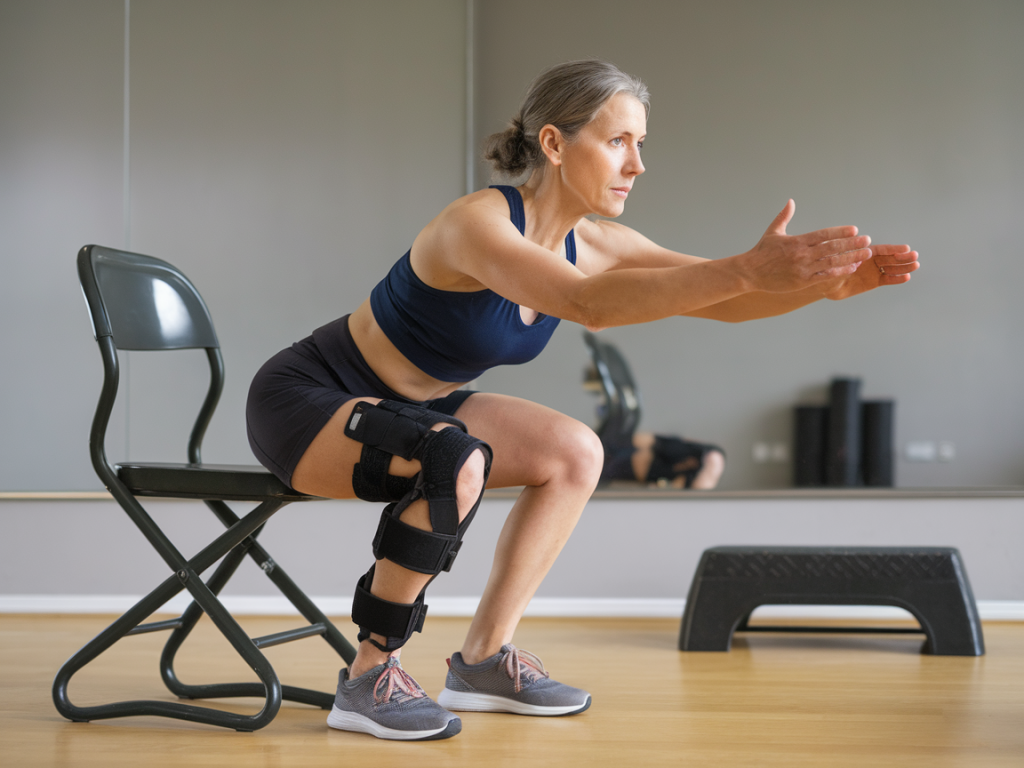
I’ve worked with clients who love strength training but have been held back by knee osteoarthritis (OA). They often ask whether a short, 20-minute routine can help without making pain worse. The short answer: yes — if you adapt exercises, manage load intelligently, and prioritize daily recovery. Below I share a practical, science-informed 20-minute strength session you can start with, progressions to keep improving, simple rules for safe load limits, and everyday recovery habits that actually support joint health.
Why a 20-minute routine can work for knee OA
Time is a real barrier for many people, and brief, focused sessions are easier to maintain. Research shows that even short bouts of targeted strength training — when done regularly and with appropriate intensity — can improve muscle strength, reduce pain and enhance function in people with knee OA. The key is consistency, good exercise selection, and a gradual progression that respects symptom response.
How I structure a 20-minute session
My go-to format is simple: 3 blocks of 6 minutes (including brief rests) focused on hip and thigh strength, mobility and balance. Each block contains one main strength movement and one accessory mobility/control exercise. This keeps the overall load reasonable but effective.
Example session (warm-up included within the first block):
- Block A — Activation & warm-up (6 minutes): 2–3 sets of 10–12 calf raises (bodyweight) and 8–12 glute bridges (hold 2–3 seconds at top). Rest 30–45s between sets.
- Block B — Strength focus (6 minutes): 3 sets of 8–12 partial squats or box squats (depth adjusted to comfort). Rest 45–60s between sets.
- Block C — Single-leg control & mobility (6 minutes): 2–3 sets of 8–10 step-ups (low step) per leg or supported single-leg stands for balance, plus a short hip flexor/calf mobility drill.
Finish with 1 minute of gentle walk or marching on the spot to cool down — keeping total time near 20 minutes.
Exercise choices and modifications
When knees are symptomatic, I prioritize exercises that strengthen the muscles around the joint without excessive compressive or shear forces. Here are my favorites and how to adapt them:
- Box squats / partial squats: Sit back to a chair or box at a height that lets your knees stay comfortable. Aim for 60–70% of your full depth initially. Use a band around knees or light dumbbells for progressive load.
- Glute bridges: Great for posterior chain strength with low knee load. Progress by elevating feet, adding a resistance band above knees, or placing a weight on the hips.
- Step-ups: Use a low step (10–20 cm) to begin. Keep the tempo controlled, pressing through the heel. Increase step height or hold dumbbells as strength improves.
- Supported single-leg stands / balance work: Reduces load but builds control. Hold onto a railing and progress to less support or add gentle knee bends on the standing leg.
- Terminal knee extensions (TKE) with band: Low impact way to strengthen the quadriceps, especially the vastus medialis obliquus (VMO). Attach a band behind the knee and perform small extensions.
Safe load limits — practical rules I use with clients
Absolute weight limits are individual, but these rules help you stay safe while progressing:
- Start with bodyweight for 2–3 weeks to establish movement quality and symptom baseline.
- Pain monitoring rule: - If pain increases during the exercise beyond a mild-to-moderate level, stop or regress the movement. If pain increases but returns to baseline within 24 hours and there’s no worsening by day 2, the load is generally acceptable. If pain worsens or persists, reduce load or volume.
- Perceived exertion: Aim for a 5–7/10 effort on a scale of perceived exertion for the working sets. You want challenge without exhaustion.
- Progress gradually: Increase load by small increments — e.g., 1–2 kg per week for lower-limb dumbbell work or adding 1–2 more repetitions.
- Limit heavy loading in early rehab: Avoid very heavy maximal squats or deep lunges in early months. These can be reintroduced, carefully, once control and pain stability are established.
Sample progressive plan (12 weeks)
| Weeks | Focus | Progression |
|---|---|---|
| 1–3 | Movement quality, activation | Bodyweight exercises, higher reps (10–15), 2–3x/week |
| 4–8 | Strength & loading | Add light weights (2–8 kg), reduce reps (8–12), 3x/week, introduce step-ups and TKE |
| 9–12+ | Capacity & functional tasks | Increase load (small increments), add single-leg squats, higher steps, and controlled plyometrics only if pain-free |
Daily recovery tips that support joint health
Strength training is only part of the story. I coach clients to use small daily habits to reduce inflammation and promote recovery:
- Move regularly, avoid long sitting stretches: Short walks and light movement through the day reduce stiffness and keep synovial fluid circulating.
- Load management: Track activities that make knees sore (e.g., long stair sessions) and balance them with lighter days. Use a simple 2:1 work-to-recovery day approach if symptoms fluctuate.
- Sleep and nutrition: Aim for 7–9 hours of sleep and include anti-inflammatory foods — oily fish, leafy greens, nuts. Consider discussing omega-3 supplementation with a clinician.
- Cold and heat: Use ice after very inflammatory flare-ups (10–15 minutes) and heat (warm bath or heat pack) before activity to ease stiffness.
- Footwear and orthotics: Supportive shoes or simple orthotic inserts (like Superfeet or similar) can reduce knee stress for some people — try them if you stand or walk a lot.
- Pacing and pain tracking: Keep a simple symptom diary — note exercise, pain during/after, and recovery. Patterns help you adjust load more intelligently.
When to seek professional input
If you notice persistent swelling, sharp joint pain, instability, or if daily activities are becoming harder despite sensible training, see a physiotherapist or your GP. A targeted assessment can identify mechanical issues, provide manual therapy if needed, and help tailor progressions safely. If you want a place to start, I often recommend looking for physiotherapists who specialize in musculoskeletal or sports rehab and who value graded strength training.
If you try this 20-minute routine, give it at least 6–8 weeks with consistent sessions before making big changes. Keep the sessions short, focus on quality, and let symptom feedback guide your progression — that’s how you build durable strength without exacerbating knee OA.