I fly a fair bit for work and for family visits, and over the years I’ve learned packing thoughtfully can make the difference between arriving ready to explore and arriving wiped out. Long-haul flights are a particular challenge: cramped seats, limited sleep windows, strange food, and time-zone shifts can all conspire to wreck sleep, upset digestion, and drain daytime energy. Below I share a practical packing strategy—what I bring in my carry-on and why—so you can protect your sleep, digestion and energy on your next long haul.
Why packing matters
Packing with intention isn’t about luggage aesthetics. It’s about stacking small, evidence-backed habits that reduce physiological stress during and after flight. Better sleep on the plane means less jet lag. Better digestion means less discomfort and inflammation. Preserving daytime energy helps you adjust faster when you land. Each item I include has a clear purpose: support sleep, soothe digestion, or boost alertness when needed.
Carry-on essentials for sleep
Anything that helps you nap or sleep in a noisy, bright cabin is worth its weight. Here’s what I always keep within reach:
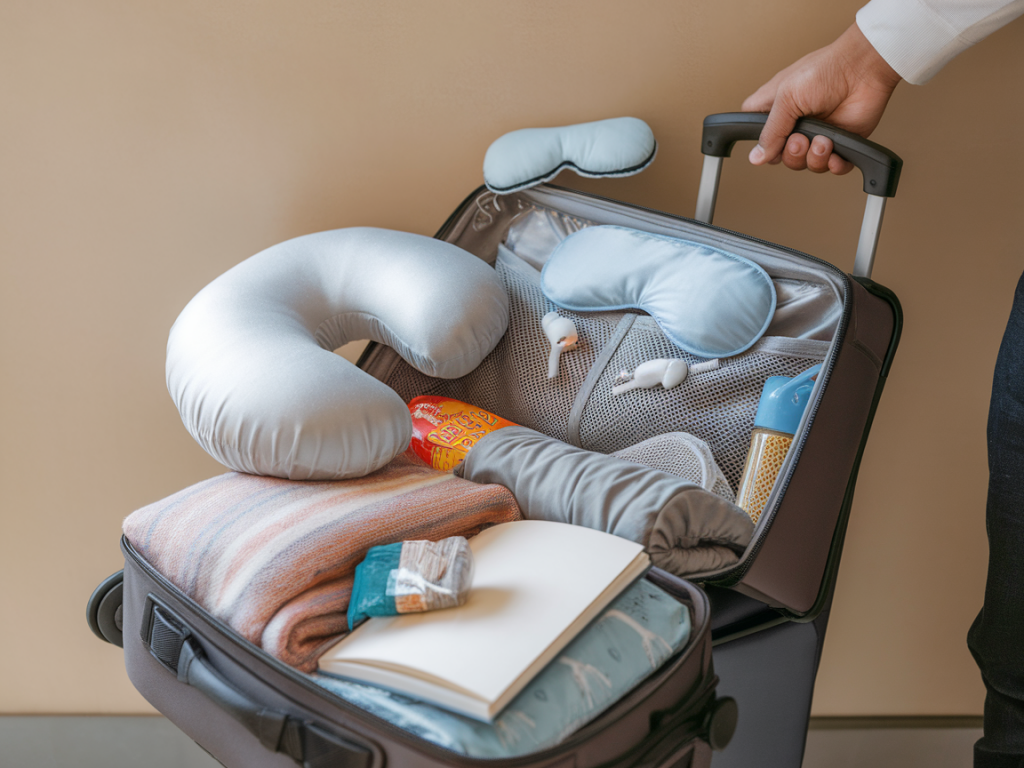
High-quality eye mask — I use a molded sleep mask (e.g., Tempur or MZOO) that blocks light and doesn’t press on my eyes. Light is a powerful cue for circadian rhythms; blocking it helps me fall asleep faster.Noise-cancelling headphones or earplugs — Active noise-cancelling headphones (Sony, Bose) make a big difference for long naps, but soft foam earplugs are a cheap, effective substitute if you want to save space.Neck pillow — I prefer inflatable or compressible memory-foam collars that compress into my bag. A neck pillow plus a reclined seat reduces neck strain and helps maintain a more restful position.Lightweight blanket or large scarf — Cabins can swing between cold and warm. A scarf or travel blanket keeps you comfortable without relying on unpredictable airline blankets.Melatonin (low dose) — I sometimes bring 1–3 mg melatonin for crossing multiple time zones. Used short-term and at the correct local bedtime, it helps shift circadian timing. I recommend trying it at home first and checking with a clinician if you’re on other medications.Sleep-friendly scents — A small roller bottle of lavender or chamomile essential oil can be calming; I apply it to my wrist or mask edge to cue relaxation.Carry-on essentials for digestion
Air travel disrupts digestion through changes in meal timing, dehydration, and cabin pressure. These items keep things moving and reduce gastrointestinal stress.
Reusable water bottle — Fill it after security. Staying hydrated is the most consistent digestive hack I use. Aim to sip regularly rather than guzzle.Ginger chews or capsules — Ginger is well supported for reducing nausea and easing digestion. I prefer natural ginger chews or 250–500 mg capsules.Electrolyte powder or tablets — Mild dehydration and low electrolytes worsen fatigue and digestion. A sachet of electrolyte powder (no added sugar) helps, especially if you’re avoiding sugary airline drinks.Probiotic travel sachets or capsules — I pack a short course of a reliable probiotic (e.g., Lactobacillus and Bifidobacterium strains) for trips longer than a week or when my routine is disrupted. Take them with food.Digestive enzyme or antacid — If you’re prone to indigestion from unfamiliar airline food, a single-dose enzyme or antacid helps you avoid prolonged discomfort.Snacks that won’t upset your stomach — Bring plain, easy-to-digest options: roasted nuts, plain crackers, banana, apple, or a small container of oats. Avoid heavy, greasy foods that are harder to digest on a plane.Carry-on essentials for daytime energy and alertness
On arrival you’ll want to be functional. These items help you manage energy without resorting to excessive caffeine or sugar.
Portable coffee/tea kit or caffeine gum — A small instant coffee sachet or yerba mate can be handy for a controlled caffeine boost. Caffeine gum (100 mg per piece) is useful for timing alertness during a layover or upon landing.Blue-light-blocking glasses — If you’ll be trying to sleep after landing in a new time zone, blocking blue light during evening helps. Conversely, wearing them in the evening at your destination helps promote earlier sleep onset.Compression socks — They reduce leg swelling and improve circulation; more comfortable legs translate into better daytime performance post-flight.Mini resistance band — A 2-minute mobility and activation sequence in the gate area or after landing raises heart rate, improves circulation and reduces stiffness.Healthy snacks with protein — Jerky, nuts, protein bars with minimal sugar — these provide sustained energy for arrival activities.Practical small extras I never forget
These aren’t glamorous but make the journey much smoother:
Phone charger and power bank — Low battery creates stress and makes sleep apps or timers useless.Paper tissues and small hand sanitizer — Airplanes are germy; I use these liberally.Lightweight change of clothes — A fresh t-shirt and socks in your carry-on make a big difference after long flights.Travel-sized toothbrush and toothpaste — I brush before landing to feel refreshed and reduce dry-mouth-related bad breath.Flight-specific medication list — If you take meds, keep a printed list and extras in your carry-on to avoid disruptions.Packing checklist table
| Goal | Item |
| Sleep | Eye mask; Noise cancelling headphones/earplugs; Neck pillow; Melatonin (optional); Blanket/scarf |
| Digestion | Reusable water bottle; Ginger; Electrolyte sachet; Probiotic; Easy snacks |
| Energy | Caffeine option; Compression socks; Mini resistance band; Protein snacks |
| Practical | Charger & power bank; Tissues & sanitizer; Change of clothes; Toothbrush |
When I pack like this I arrive in a better place physically and mentally. Small supports—hydration, light control, movement, and gentle digestive aids—stack into meaningful benefits. If you’re trying any supplements for the first time, test them at home first. And if you have specific medical conditions, check with your clinician about what’s safe.