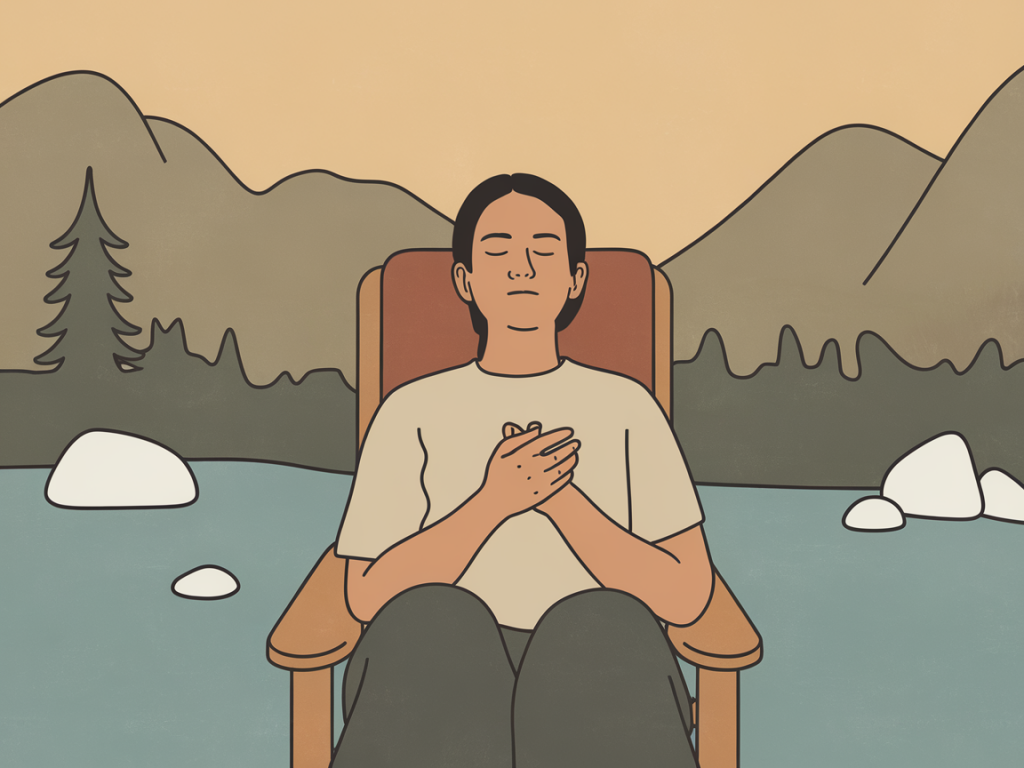
I still remember the first time my hands shook before a short team presentation. My voice felt thin, my thoughts scattered, and for a moment it all felt out of control. Since then I've leaned on simple, repeatable tools to steady my nervous system — and one of the quickest, most reliable is the 2:2 breathing method. It’s become my go-to when I have five minutes (or less) before a meeting, and I want to feel calmer, clearer and more present.
What is 2:2 breathing?
2:2 breathing is a very simple paced-breathing technique: you inhale for two seconds, then exhale for two seconds, and repeat. That consistency — a short, equal inhale and exhale — helps shift your autonomic nervous system away from the “fight-or-flight” response and toward a calmer state. It’s not a meditation or a long breathing practice; it’s a quick regulation tool you can use in a hallway outside a meeting room, while sitting at your desk, or even standing at the front of a room right before you speak.
Why it works (brief science)
Breathing is one of the few autonomic functions we can consciously control. Changing the pace and rhythm of our breath sends signals to the brainstem and the vagus nerve, which influence heart rate variability (HRV) and the balance between sympathetic (stress) and parasympathetic (rest) activity. Even short, paced breathing can:
- Reduce heart rate and blood pressure slightly.
- Increase HRV, which is associated with better stress resilience.
- Provide a rapid focus anchor, which reduces runaway thoughts and anxiety.
For acute stress — that tight-nosed, racing-heart feeling before a talk — even a minute or two of 2:2 breathing often produces perceptible changes.
My step-by-step 2:2 routine for before presentations
I use this exact routine before most talks. It fits into a 2–5 minute window and requires nothing but a breath and a quiet corner.
- Step 1 — Get comfortable: Stand or sit with a straight but relaxed posture. If I’m on my way to the room, I’ll lean against a wall. If I have a seat, I’ll place my feet flat on the floor and soften my shoulders.
- Step 2 — Ground your attention: Close your eyes if it’s safe to do so, or lower your gaze to an unfocused point. Take one normal breath and notice the physical sensations — the chest, the ribs, the belly moving.
- Step 3 — Start the 2:2 pattern: Inhale for a steady count of two (1–2). Exhale for a steady count of two (1–2). No need to force deep breaths — they can be natural and comfortable.
- Step 4 — Repeat for 8–12 cycles: That’s roughly 30–60 seconds. If you have more time, continue for up to 3 minutes.
- Step 5 — Add a simple affirmation: At the end of the set, take a normal breath and silently say to yourself: “I’m ready” or “Clear and calm.” This helps link the physiological change to your mental state.
Timing and practical tips
Here are some practical ways I use 2:2 breathing depending on how much time I have:
- 2–5 minutes before a presentation: Do 2–3 sets of 12 cycles with a brief walk in between. Movement plus paced breathing helps clear adrenaline.
- Under 1 minute: Do one 30–60 second set of uninterrupted 2:2 breaths. It’s surprising how much a single minute can change your heart rate and attention.
- During a break between slides: Take two quiet 2:2 breaths while scanning your notes. They’re brief enough to be discreet and effective.
Variations and modifications
Not every body responds the same way. Here are the easiest tweaks I use:
- 2:2 with a soft hum (2:2H): After the exhale, make a gentle humming sound. The vibration can stimulate the vagus nerve more strongly for extra calm.
- 2:4 variation: If you have a little more time and want deeper parasympathetic engagement, try inhaling for 2, exhaling for 4. This lengthens the out-breath, which tends to be more relaxing.
- Hands on belly: Place one hand on belly, one on chest to ensure breathing is diaphragmatic. The inhale should expand the lower ribs rather than lift the shoulders.
Common issues and how to fix them
People often tell me the breathing makes them lightheaded, or that they don’t feel anything. Here’s what I suggest:
- If you feel dizzy: Slow your pace to a natural, comfortable rhythm. 2:2 should feel easy; don’t force big inhales or pushes on the exhale. Sit down until the feeling passes.
- If your mind races: Anchor to the counting. Count silently “one-two” on each inhale and “one-two” on each exhale. Counting itself is a cognitive anchor that reduces rumination.
- If you’re short of breath: Reduce cycle length — try 1.5:1.5 or take a few normal breaths between cycles. Over time your capacity will improve.
When not to use it, or use with care
2:2 breathing is safe for most people, but be cautious if you have:
- Severe respiratory conditions (severe COPD, uncontrolled asthma) — check with your clinician first.
- A history of panic attacks where breathing exercises can sometimes trigger more anxiety — in that case, guided therapies or therapist-supported breathing work is better.
- Recent syncopal episodes (fainting) — avoid dramatic breath-holding or forced patterns.
Tools and apps I use
Sometimes I want a guiding cue or a discreet visual. I’ve used:
- Insight Timer: Free meditations with breathing timers and gentle bells.
- Respire or Breathwrk: Small apps that guide rhythms like 2:2 or 2:4 with vibration cues — handy if you’re behind the lectern and don’t want to watch the screen.
- Apple Watch or other wearables: Their “Breathe” or “Mindfulness” reminders provide haptic pacing that’s subtle and private.
How I integrate 2:2 into a broader prep routine
On the day of a presentation I combine the breathing with other practical steps:
- Light movement five minutes before (walk or gentle stretches) to dissipate excess adrenaline.
- Voice warm-ups: hum or read a short paragraph aloud to steady pitch and breath control.
- One 2–3 minute 2:2 breathing set immediately before entering the room, plus two deep, purposeful breaths before I start speaking.
Putting these steps together reduces the “spike” of acute stress and gives me a reliable sense of control. It’s less about eliminating nerves entirely (I don’t aim for zero nerves) and more about turning the energy into focused presence.
A quick script you can use
Here’s a short inner script I use to pair with the breathing — you can repeat it silently while you do 2:2:
- “Inhale calm (1–2). Exhale tension (1–2).”
- Or: “Anchor, steady, speak.”
Simple phrases like these help transfer the physiological change into actionable confidence when you stand up to speak.
If you want, I can create a short downloadable audio file or a timed breathing GIF you can keep on your phone for pre-meeting use. At Isrmt Co (https://www.isrmt.co.uk) I focus on small, practical strategies like this that you can actually use in everyday life — not theoretical fixes. If you’ve tried 2:2 breathing, tell me what worked and what didn’t; I’m always adjusting the routine based on readers’ experiences.