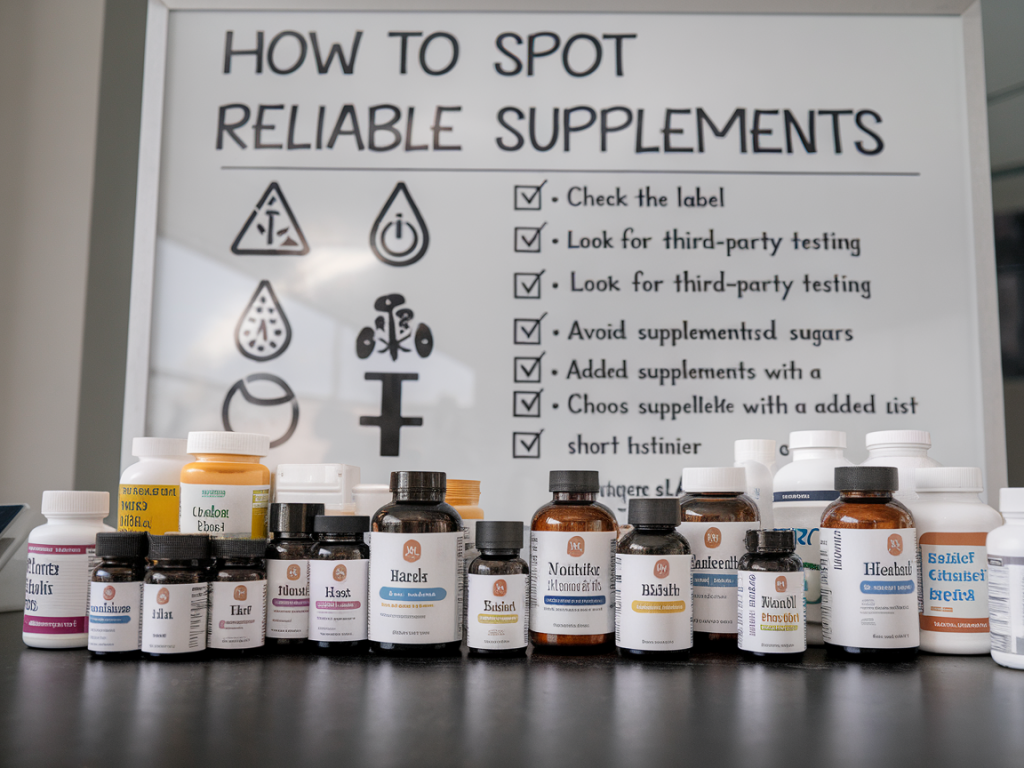
Buying supplements can feel like navigating a minefield. Labels promise everything from overnight recovery to brain-boosting magic, while shelves — both online and in-store — brim with unfamiliar brand names and opaque ingredient lists. Over the years I’ve learned that a few simple checks separate legitimate products from the ones that are best left on the shelf. Below are six lab tests and label details I routinely look for whenever I’m considering a supplement. These checks take a few minutes but save you money, reduce risk, and help ensure what’s on the label is actually what’s in the bottle.
Third-party testing seals (and what they mean)
One of the first things I scan for is a third-party testing seal. Reputable labs like USP (U.S. Pharmacopeia), NSF International, and ConsumerLab independently test supplements for purity, potency, and contaminants. If a product carries one of these seals, it means an external lab verified the product — not the company itself.
That doesn’t automatically mean the product is perfect, but it does mean the company is willing to put its formula through independent scrutiny. I’m more cautious about products that only claim “lab-tested” without naming the lab or providing a certificate of analysis (COA).
Certificate of Analysis (COA)
A COA is my go-to document. It’s a detailed lab report showing the results for specific batches, including the amount of active ingredient and tests for contaminants (heavy metals, microbial contamination, pesticides). Reputable companies often link COAs on the product page or provide them on request.
When I ask for a COA I check three things: the test date (recent), the batch number (matches the product I have or want to buy), and the lab name (independent and accredited). If a brand hesitates or sends something vague — that’s a red flag.
Purity tests: heavy metals and contaminants
Heavy metals (lead, arsenic, cadmium, mercury) and microbial contamination are common concerns, especially for botanicals, seaweed-derived nutrients, and protein powders. I look for explicit test results on these. For example, reputable omega-3 or kelp supplements will show testing for arsenic and mercury.
Brands like Thorne or Nordic Naturals often publish detailed contaminant testing. If a company doesn’t test for heavy metals or claims “natural” as proof of safety — I treat that as a warning sign.
Potency and bioavailability testing
It’s not enough for a label to say “500 mg” — I want evidence that the labeled dose is present and that the form of the nutrient is absorbable. Potency tests confirm the amount of active ingredient per serving. For certain nutrients, the chemical form matters: magnesium oxide behaves differently in the body than magnesium citrate; folic acid differs from methylfolate.
Look for language or testing that confirms the specific form used (e.g., “methylcobalamin” vs “cyanocobalamin”) and any evidence of enhanced absorption. Some companies cite human pharmacokinetic studies or in vitro dissolution tests to demonstrate bioavailability.
Stability testing (shelf-life and storage)
Stability testing shows how well a product retains potency over time under specific storage conditions. This can be especially important for probiotics, vitamin C, omega-3 oils, and other compounds that degrade. On-label expiration dates are useful, but the underlying stability data tells you whether a product will still deliver the expected dose weeks or months before expiration.
If a product contains live cultures (probiotics), check whether the CFU count is guaranteed through the expiration date or only at manufacture. I prefer products that guarantee viability through the printed expiry rather than those that only report initial CFUs.
Identity testing and ingredient verification
Ingredient identity testing (often via HPLC, mass spectrometry, or DNA barcoding for botanicals) verifies that the ingredient listed is actually present and not substituted or contaminated. This is crucial for herbal products where misidentification or adulteration has been reported (e.g., some weight-loss or libido supplements).
For example, if a curcumin supplement claims standardized 95% curcuminoids, I want to see analysis confirming that percentage. Similarly, if a product advertises “pure ashwagandha,” an identity test that differentiates Withania somnifera from related species or fillers is reassuring.
Quick checklist I use before buying
How to request and read a COA (what I actually ask for)
When a label or product page doesn’t have a COA, I email customer support and ask: “Can you provide the COA for batch [lot number] showing potency and contaminant testing?” Keep it specific — ask for the batch you’ll receive, not a generic certificate. A legitimate company will either provide a PDF or link to a lab report. If they push back or give a generalized statement instead, I move on.
When reading the COA I compare the reported values to the label. Small variance is normal, but anything beyond typical manufacturing tolerance (±10–20% depending on the ingredient) is concerning. For contaminants, compare results to recognized safety limits — and if you’re unsure, ask the company or look up limits from regulatory bodies like EFSA, FDA, or local authorities.
Brands and transparency — examples from my experience
In my experience, brands that prioritize transparency tend to be smaller or mid-sized companies with strong quality systems. I’ve had good experiences with brands like Thorne, Pure Encapsulations, and Garden of Life (when they provide COAs). These companies commonly publish testing data and are responsive to COA requests.
Conversely, I’ve seen many direct-to-consumer startups rely on glossy marketing without backing it up. A few shady products I’ve reviewed claimed “clinically proven” doses yet couldn’t produce supporting clinical references or batch test results when asked.
Practical trade-offs and final tips I follow
Not every beneficial product will have every possible test. If a supplement is inexpensive and low-risk (e.g., standard vitamin D at recommended doses from a well-known manufacturer with basic testing), I’m less strict. For high-risk categories — concentrated botanicals, sports performance enhancers, or products aimed at weight loss — I demand full transparency: COAs, identity testing, and contaminant screens.
Finally, keep records. When I buy something new I note the lot number and save the COA. That way if there’s ever a recall or a question, I have documentation. A little vigilance goes a long way in a crowded market — and it’s one of the simplest habits that helps me feel confident about what I put into my body.