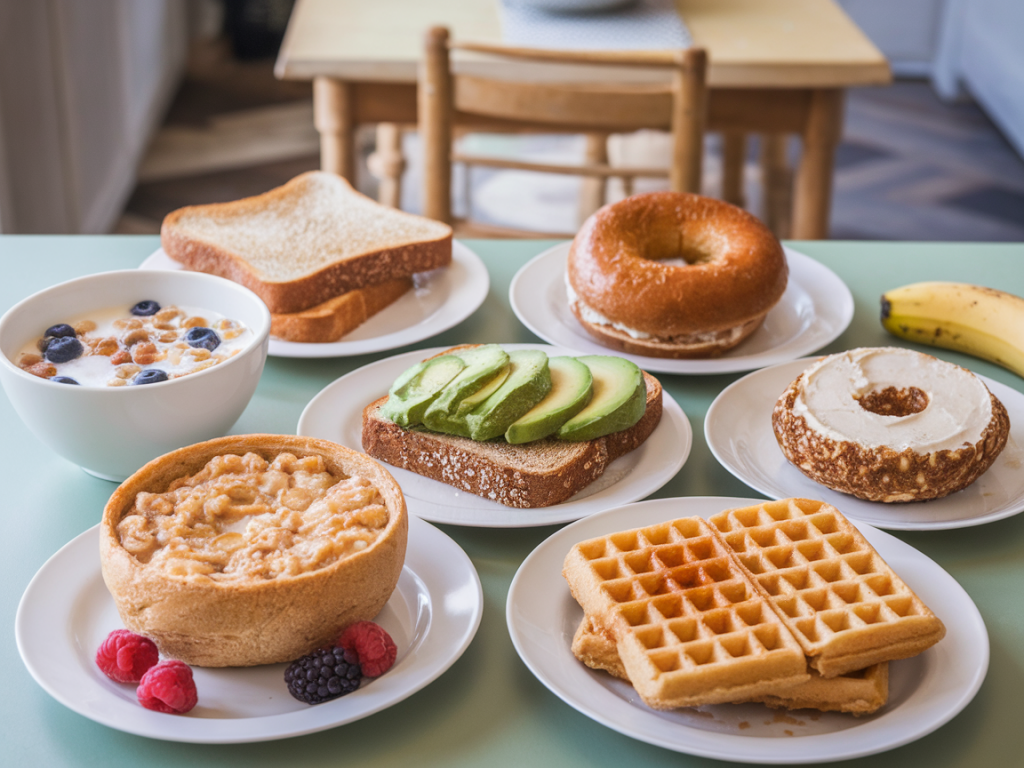
I used to reach for convenience every morning: sugary cereal, packaged muffins, flavoured yogurt pots. They solved the immediate problem of “I’m late” but not the day-after problem of mid-morning energy crashes, cravings and foggy focus. Over the years I swapped those quick fixes for whole-food breakfasts that actually stabilize blood sugar and keep me steady until lunch — without sacrificing taste or convenience.
Why blood sugar stability matters first thing
Keeping blood glucose steady after breakfast matters for energy, mood, appetite control and concentration. Rapid spikes from refined carbs and added sugars are often followed by a steep drop (reactive hypoglycaemia for some), which triggers hunger and cravings for more quick carbs. I focus on three simple levers to blunt those spikes: fiber, protein and healthy fats. Together they slow digestion and the rise of blood glucose, making your morning more consistent.
How I decide a breakfast is “ultra-processed”
For me, an ultra-processed breakfast is often one where ingredients are removed from their whole-food form and reassembled with added sugars, refined flours, industrial oils or long lists of additives. Think: packaged breakfast bars, instant pancakes, fluffy supermarket croissants, flavoured low-fat yogurts with added sugars, or many cereals with long ingredient lists. They tend to be low in fiber and protein and high in quickly absorbed carbs.
Swap these 5 ultra-processed breakfast habits for whole-food options
Below are the habits I replaced and the practical swaps I use now. Each swap is designed to boost protein and fiber while keeping preparation realistic for busy mornings.
Why it works: Steel-cut or rolled oats are minimally processed and packed with soluble fiber (beta-glucan) that helps blunt glucose rises. Add a tablespoon of chia or ground flax for extra fiber and omega-3s, and a small handful of nuts (almonds, walnuts) for protein and fat. Sweeten sparingly with fresh fruit or a drizzle of honey.
Quick recipe I use: 40g rolled oats + 150ml milk or oat drink, 1 tbsp chia, 75g mixed berries, 15g chopped almonds. Microwave for 90s or prepare overnight in the fridge.
Why it works: Swap refined flour for whole-grain bread to increase fiber and slow digestion. Nut butter provides protein and healthy fats that reduce post-meal glucose spikes. Banana adds taste and potassium but keep portion moderate — half or one small banana is often enough.
Brand note: I like seeded whole-grain loaves for texture and a higher fiber content. If you use store-bought peanut butter, choose versions with only nuts and salt (e.g., Whole Earth, Meridian) rather than those with added sugar or hydrogenated oils.
Why it works: Flavoured yogurts usually hide a lot of sugar. Plain Greek yogurt has higher protein and lower carbohydrate per serving. Add fresh fruit for sweetness, pumpkin seeds for zinc and magnesium, and a small spoon of granola for crunch (choose low-sugar brands or a homemade mix).
Tip: I portion the granola so it’s a crunchy accent, not the main carb source.
Why it works: Many bars are marketed as “healthy” but are effectively candy bars with nuts. Making a small batch of dates + oats + nuts + cocoa or buying a simpler bar (check for whole ingredients and minimal added sugar) gives you control over sugar and fiber. A simple apple and 20g almonds is an extremely portable, balanced option.
Recipe I use: Blend 150g dates, 100g oats, 80g almond butter, 30g cocoa, pinch of salt. Roll into 12 balls. Store in the fridge for 10–14 days.
Why it works: Instant sachets are often full of added sugar and flavourings. Make your own smoothie with a base of plain Greek yogurt or 20–30g protein powder, a portion of fruit (half banana or some berries), a handful of spinach and a tablespoon of ground flax. It’s fast, satiating and blood-sugar friendly when you include protein and fiber.
Portable option: Blend the night before and keep in a chilled bottle. If you travel a lot, I keep a small tub of protein powder and single-serve nut butter sachets for on-the-go mixes.
Simple rules I follow (they make swaps stick)
- Balance each breakfast: aim for protein + fiber + some healthy fat.
- Watch added sugars: check labels and keep added sugars low (I aim for <10–15g per breakfast).
- Portion sense: whole-food swaps can still be caloric. Nuts and nut butters are healthy but calorie-dense — I use measured portions.
- Prep one evening a week: overnight oats, energy balls, and portioned nuts save mornings.
- Keep it tasty: include a favourite flavour (cinnamon, cocoa, vanilla) so you don’t feel deprived.
Sample week of breakfasts I rotate
| Day | Breakfast |
|---|---|
| Monday | Overnight oats with chia, blueberries, almonds |
| Tuesday | Whole-grain toast, avocado, poached egg |
| Wednesday | Plain Greek yogurt, mixed fruit, pumpkin seeds |
| Thursday | Smoothie with spinach, protein powder, banana, flax |
| Friday | Quinoa porridge with cinnamon, chopped apple, walnuts |
How to convince kids (and picky adults)
When I started switching breakfasts at home, I learned small changes win more than big decrees. Here are practical tactics I’ve used:
- Mix old and new: add a few berries to their cereal rather than removing it completely that week.
- Make it fun: breakfast jars, decorated smoothie bowls, or letting them pick one topping (seeds, banana slices) increases buy-in.
- Texture swaps: if they love crunch, keep a small amount of granola or toasted oats on top of a yoghurt bowl.
- Educate gently: explain “gives you steady energy” rather than “sugar is bad”.
Quick myth-busting
Myth: “Fat-free is best for breakfast.” Not always. Low-fat often means added sugars for taste. Including some healthy fats (nuts, seeds, avocado) helps slow digestion and stabilise glucose.
Myth: “Carbs are the enemy.” Carbs from whole grains, fruit and legumes are fine — they’re the quick-digesting refined carbs and added sugars that create spikes.
Shopping list to get started
- Rolled or steel-cut oats
- Chia seeds, ground flax
- Plain Greek yogurt
- Whole-grain bread or wraps
- Mixed nuts and natural nut butters
- Frozen berries and spinach
- Quinoa (for porridge) or cooked grains
- Protein powder (optional, look for minimal ingredients)
Switching five small morning habits made a big difference to how I feel through the day. The key was choosing whole-foods that are simple, satisfying and a little bit indulgent — just enough to make the change realistic and enjoyable. If you want, tell me which breakfast you’re thinking of swapping and I’ll suggest a tailored replacement you can actually stick with.